Showing posts with label research. Show all posts

Tuesday, November 9, 2021

"Could long COVID unlock clues to chronic fatigue and other poorly understood conditions?"

Via The Washington Post: 

"In early 2020, Alison Sbrana watched the coronavirus skip from China across continents with a sense of impending doom. Sbrana, plagued by fatigue and brain fog since being diagnosed with mononucleosis six years earlier, was convinced that the pernicious new virus would wreak similar havoc in some of those who contracted it.

Her intuition proved prescient. Some people who had suffered even mild cases of covid-19 began complaining of problems that Sbrana knew too well, including muscle pain and drop-dead exhaustion. Now, as millions of people nationwide are suffering from long-haul COVID, Sbrana and an army of patient advocates are cautiously hopeful that new research may unlock clues to other conditions that appear to crop up after infections, including myalgic encephalomyelitis/chronic fatigue syndrome, known as ME/CFS.

“I think there is potential,” said Sbrana, who suffers from ME/CFS.

COVID long-haulers inherited many of the challenges that have faced people like Sbrana for years, including a lack of understanding of the mechanisms that triggered their disabilities — leaving some doctors to view their symptoms as largely psychosomatic."
Continue reading the article online. (Subscription maybe required)

Alison Sbrana, who struggles with fatigue and brain fog after having mono several years ago, sits on a screened-in patio at her home in Fort Collins, Colo., on Nov. 3. (Stephen Speranza/for The Washington Post)


Wednesday, August 25, 2021

“We should not even be thinking about closing the book or backing off, but rather ratcheting up the effort”

As shared earlier this week (Virus theory vs politics: "unlikely hard answers will be provided this week"), the report did lead to no hard conclusions and more research (in the scientific manner) remains to be done. The 90 day push accomplished much but could not reach a conclusion in the time allotted.

"President Biden on Tuesday received a classified report from the intelligence community that was inconclusive about the origins of the novel coronavirus, including whether the pathogen jumped from an animal to a human as part of a natural process, or escaped from a lab in central China, according to two U.S. officials familiar with the matter.

The intelligence community will seek within days to declassify elements of the report for potential public release, officials said.

The assessment is the result of a 90-day sprint after Biden tasked his intelligence agencies in May to produce a report “that could bring us closer to a definitive conclusion” on the origins of a virus that has killed more than 4 million people globally and wrecked national economies. But despite analyzing a raft of existing intelligence and searching for new clues, intelligence officials fell short of a consensus, said the officials, who spoke on the condition of anonymity because the report is not yet public."

Continue reading the article online (subscription maybe required)

New York Times coverage of this topic (subscription maybe required)

Monday, March 29, 2021

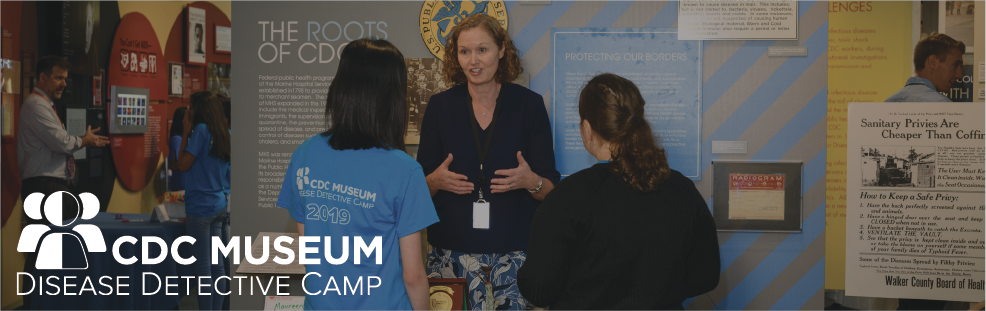
Next year juniors/seniors in high school - check out the CDC Museum Disease Detective Camp


"Do you know a rising high school junior or senior interested in public health? @CDCgov Disease Detective Camp is an incredible experience, and this year it is offering a new, web-based Public Health Academy for remote learners!"

"All students to who will be high-school juniors or seniors during the 2021-2022 school year and at least 16 years old on the first day of the camp session to which they are accepted.

As the CDC Museum remains closed due to COVID-19 precautions, we are not able to predict yet if in-person programming will be available the summer of 2021. If the museum is not reopened for in-person programming, the CDC Museum will offer only online courses. A final decision on in-person programming will be made May 3, 2021; all applicants will be notified of the decision by email."

Details and reg links:  https://t.co/z1Fk2qnM9a
Shared from Twitter: https://twitter.com/dmaccannell/status/1376196094632267778

Next year juniors/seniors in high school - check out the CDC Museum Disease Detective Camp


Thursday, February 11, 2021

JAMA Insights: "Effectiveness of Mask Wearing to Control Community Spread of SARS-CoV-2"

Here's the data: 
"Prior to the coronavirus disease 2019 (COVID-19) pandemic, the efficacy of community mask wearing to reduce the spread of respiratory infections was controversial because there were solid relevant data to support their use. During the pandemic, the scientific evidence has increased. Compelling data now demonstrate that community mask wearing is an effective nonpharmacologic intervention to reduce the spread of this infection, especially as source control to prevent spread from infected persons, but also as protection to reduce wearers’ exposure to infection.

COVID-19 spreads primarily through respiratory droplets exhaled when infected people breathe, talk, cough, sneeze, or sing. Most of these droplets are smaller than 10 μm in diameter, often referred to as aerosols. The amount of small droplets and particles increases with the rate and force of airflow during exhalation (eg, shouting, vigorous exercise). Exposure is greater the closer a person is to the source of exhalations. Larger droplets fall out of the air rapidly, but small droplets and the dried particles formed from them (ie, droplet nuclei) can remain suspended in the air. In circumstances with poor ventilation, typically indoor enclosed spaces where an infected person is present for an extended period, the concentrations of these small droplets and particles can build sufficiently to transmit infection."'

Continue reading the Article in the Journal of  American Medicine Association (JAMA)  https://t.co/x8sTs9y8Rw


Effectiveness of Mask Wearing to Control Community Spread of SARS-CoV-2


Tuesday, January 5, 2021

The Guardian: "How the 'shecession' will cause long-term harm for women in the US"

"For the first time in history, the US is in a “shecession” – an economic downturn where job and income losses are affecting women more than men. The term was coined by C Nicole Mason, president and chief executive of the Institute for Women’s Policy Research (IWPR), a thinktank.

Mason put forward the term to highlight the disproportionate impact of this economic downturn on women. More than 11 million women have lost their jobs and another 2.65 million have left the workforce since February, according to an IWPR analysis of labor department data.

Mason spoke to the Guardian recently about what needs to change to get an equitable economic recovery."
Continue reading the article online (subscription may be required)

Friday, June 26, 2020

"Some 2,000 hidden infections were already spreading through major cities"

From the New York Times, comes a great read showing research on how much travel (without social distancing and other measures) spread the virus around  before the country acted on it. 

Note: this is best viewed on a laptop/desktop. The phone screen was too small to display the scrolling data.
 
"Invisible outbreaks sprang up everywhere. The United States ignored the warning signs. We analyzed travel patterns, hidden infections and genetic data to show how the epidemic spun out of control."

https://www.nytimes.com/interactive/2020/us/coronavirus-spread.html

screen capture of NY Times article

Thursday, November 14, 2019

Sleep Research Event features Dr. Judith Owens - Nov 19

"Join us as we welcome Dr. Judith Owens, Director of the Center for Pediatric Sleep Disorders at Boston Children's Hospital and Professor of Neurology at Harvard Medial School.
She will be sharing her expertise in the areas of sleep regulation, consequences of sleep deficiency, school start times perspectives, challenges for communities and lessons to be learned.
Please RSVP to this event so we can plan accordingly."

RSVP via the Facebook event
https://www.facebook.com/events/514630795786417/

Sleep Research Event features Dr. Judith Owens - Nov 19

Tuesday, September 17, 2019

“Almost everyone has a story or a close call like this"

From the Milford Daily News, articles of interest for Franklin:

"The first sexual experience for 1 in 16 U.S. women was forced or coerced intercourse in their early teens, encounters that for some may have had lasting health repercussions, a study suggests.

The experiences amount to rape, the authors say, although they relied on a national survey that didn’t use the word in asking women about forced sex.

Almost 7 percent of women surveyed said their first sexual intercourse experience was involuntary; it happened at age 15 on average and the man was often several years older.

Almost half of those women who said intercourse was involuntary said they were held down and slightly more than half of them said they were verbally pressured to have sex against their will."

Continue reading the article online (subscription may be required)
https://www.milforddailynews.com/zz/news/20190916/many-us-women-say-1st-sexual-experience-was-forced-in-teens


JAMA Research  
https://jamanetwork.com/journals/jamainternalmedicine/article-abstract/2751247

JAMA Commentary 
https://jamanetwork.com/journals/jamainternalmedicine/article-abstract/2751244 

Forced and Coerced Sexual Initiation in WomenNew Insights, Even More Questions
Forced and Coerced Sexual Initiation in Women New Insights, Even More Questions