
DPH collected two beach water samples one week apart, and cyanobacteria levels are now below DPH guidelines.
✅ The beach advisory has officially been lifted.
Enjoy the water and stay safe!
Shared from - https://www.facebook.com/

Law expands access to midwifery care and out-of-hospital birth options
Massachusetts Governor Maura Healey has signed into law a comprehensive midwifery and maternal health legislative package that creates a state licensure pathway for certified professional midwives and lactation consultants, encourages the creation of more freestanding birth centers, establishes a grant program to address maternal mental health and substance use disorder, and expands the statewide universal postpartum home visiting program. This legislation also mandates that insurers cover post-pregnancy mental health screenings and pediatric well visit appointments once per calendar year up to age six.
"I am so very happy, proud, and grateful that the midwives and maternal health bill is now law," said Senator Becca Rausch (D-Needham), lead Senate sponsor of multiple bills included in the omnibus legislation. "In addition to joining the 38 other states that already license certified professional midwives, this single legislative package squarely addresses our maternal health crisis, honors patient choice in maternal care, improves patient outcomes, reduces inequities in maternal health care, lowers health care costs, enhances access to pediatric care, boosts post-pregnancy mental health care, and much more. With this reproductive justice legislation, we significantly uplift people deciding for themselves whether, when, and how to parent. Today is the culmination of years of work by so many advocates, experts, and lawmakers, to save and improve lives as we reaffirm that Massachusetts values women's health and self-determination."
The ceremonial bill signing at the State House Grand Staircase was full of joy amongst the more than 100 people who attended. It was profoundly powerful for legislation about midwifery, a profession undermined for far too long, to be signed at the heart of our state's power and legitimacy.
A central pillar of the legislative package is licensure for certified professional midwives, or CPMs, a bill Rausch has filed and championed in the Massachusetts Senate, co-filed by Representatives Kay Khan and Brandy Fluker Oakley in the House of Representatives. The legislation creates the Board of Registration in Midwifery within the Department of Public Health (DPH) to license and provide oversight of licensed CPMs, enhancing their professional self-governance, practice autonomy, and authority to use important and life-saving medication. The law also ensures equitable reimbursement of certified nurse-midwives by requiring that they receive payment rates equal to those for the same services performed by a physician under MassHealth.
In an effort to proactively address mental health needs, the legislation requires MassHealth and commercial insurance coverage for post-pregnancy depression screenings for all post-pregnancy patients, without regard to how a pregnancy may have ended. The legislation also requires screenings to be offered at maternal and other adult care appointments, rather than exclusively at pediatric appointments, thereby reaching all post-pregnancy cases, including miscarriage. The inclusion of all post-pregnancy cases reflects a bill filed by Rausch earlier this term. Further, DPH will develop and maintain a comprehensive digital resource center on post-pregnancy mental health conditions and services and conduct a pregnancy loss awareness program.
Two other priorities championed by Rausch are encompassed in the legislation: a provision to improve patient safety by requiring licensed supervision of pregnancy-related ultrasound services, co-filed by Representative Sally Kerans; and a requirement that insurers cover well-child pediatric visits for young children once per calendar year rather than once every 12 months, co-filed by Representative Sean Garballey, so families can stay on schedule with their children's birthdays even if a doctor's appointment has to be postponed or rescheduled.
To encourage the creation of more freestanding birth centers, which operate independent from hospital systems, the law requires DPH to promulgate updated regulations governing the licensure of freestanding birth centers to ensure safe, equitable, and accessible birth options.
The legislation also requires that MassHealth cover noninvasive prenatal screenings to detect whether a pregnancy is at increased risk for chromosomal abnormalities for all pregnant patients regardless of age, baseline risk, or family history. The law requires health insurers to provide coverage for medically necessary pasteurized donor human milk and products derived from it, serving as a critical source of nutrition for the growth and development of babies, particularly for vulnerable premature infants. To better support new mothers in their feeding journeys, the law also authorizes the Board of Allied Health Professionals to license lactation consultants to ensure their services are eligible for reimbursement through the patient's insurance.
The law provides critical support for birthing people and their families during the postpartum period, including requiring DPH to conduct a public awareness campaign about perinatal mood and anxiety disorders, and to develop and maintain a digital resource center that will be available to the public. It also requires that perinatal individuals be offered a screening for postpartum depression and major depressive disorder, and that those services be covered by health insurance plans. To better address barriers in access to care and reduce racial inequities in maternal health, the law expands the universal postpartum home visiting program administered by DPH and provides coverage for the program's services.
Additionally, the law requires DPH to develop and disseminate public information about pregnancy loss to the public and perinatal health care workers to prioritize the physical and mental health care of patients affected. It also requires DPH to establish a program to conduct fetal and infant mortality reviews (FIMR) to identify social, economic, and systems level factors associated with fetal and infant deaths and inform public health policy programs. The law also includes a provision that will allow Massachusetts residents to use earned paid sick time in the event of a pregnancy loss.
The law ensures that the Maternal Mortality and Morbidity Review Committee will have access to essential records required to conduct thorough and timely reviews of maternal deaths and pregnancy complications. This will enable the Committee to formulate comprehensive recommendations to improving maternal outcomes and prevent mortality. The law also establishes a grant program under the Executive Office of Health and Human Services aimed at addressing maternal mental health. This program will support the establishment or expansion of initiatives serving perinatal individuals, particularly those in underserved populations, to improve mental health, behavioral health, and substance use disorder.
The law establishes a nine-member task force to study the current availability of, and access to, maternal health services and care, as well as essential service closures of inpatient maternity units and acute-level birthing centers. The task force will identify methods of increasing financial investment in, and patient access to, maternal health care in the Commonwealth.
The legislative text can be found online -> https://malegislature.gov/Bills/193/H4999
 |
| Governor Healey Signs Into Law Comprehensive Midwifery and Maternal Health Legislation for Massachusetts |
 |
| Annual Report Of The Franklin Health Department: FY 2023 Report |
"We know the experiences of people with disabilities are unique and nuanced – which is why we're asking you to take our Community Health Equity survey.
Your answers can help us develop new ways to improve accessibility for all in MA: https://t.co/XyKgancaRD"
Shared from -> https://twitter.com/MassDPH/status/1703151836721557915
 |
| Mass. Public Health seeks your input on survey: "What makes a community healthy and strong?" |
Today (May 31, 2023) is "World No Tobacco Day"! The tobacco epidemic is one of the biggest public health threats the world has ever faced, killing more than 8 million people a year -tobacco kills up to half of its users!
Find out tips and steps to quit smoking: https://www.cdc.gov/tobacco/
 |
| Weekly Wellness Update - World No Tobacco Day |

It's Youth Sports Safety Month.
Help your kids enjoy their favorite sports safely.
Explore some tips from the CDC to get you started: cdc.gov/headsup/youthsports
 |
| Franklin Health Department: Wellness Update - Youth Sports Safety Month |
It is important to acknowledge the instances globally in which the public health system worked as it was designed — outbreaks that were mitigated and prevented through community trust, rapid vaccine deployment and an effective public health workforce. https://t.co/JVADQ0hJhe
"While cutting-edge vaccine technology and genomic sequencing have received lots of attention in the COVID years, the interventions that helped prevent these six pandemics were steadfastly unglamorous: building the trust of communities in the local health system. Training local staff in how to report a suspected problem effectively. Making sure funds are available to dispense swiftly, to deploy contact tracers or vaccinate a village against rabies. Increasing lab capacity in areas far from the main urban centers. Priming everyone to move fast at the first sign of potential calamity."
 |
| Luke Dray/Getty Images |
"When the coronavirus vaccines first emerged, they were shown to have 94 to 95 percent efficacy in preventing symptomatic COVID-19.It was a situation where the message from public health officials was fairly simple – get the shot and help prevent the spread of the disease. Vaccine mandates, passports, and other measures were all deemed smart public health policy.But as variants of the disease began to appear and multiply, the vaccines couldn’t keep pace. Infections spread rapidly and Shira Doron, an infectious disease physician and hospital epidemiologist at Tufts Medical Center, said public health messaging couldn’t keep up."
 |
| Shira Doron, an infectious disease physician and hospital epidemiologist at Tufts Medical Center |
FM #880 = This is the Franklin Matters radio show, number 880 in the series.
This session of the radio show shares my conversation with Franklin's Health Director Cathleen Liberty November 8, 2022. We had our conversation via virtual conference bridge to adhere to the ‘social distancing’ requirements of this pandemic period.
The recording runs about 36 minutes, so let’s listen to my conversation with Cathleen. Audio file -> https://franklin-ma-matters.captivate.fm/episode/fm-877-franklin-ma-health-director-cathleen-liberty-11-08-22
--------------
Metacomet Health page -> https://www.metacometpha.org/
Health Dept page https://www.franklinma.gov/health-department
Health Dept - COVID reporting dashboard ->
https://www.franklinma.gov/health-department/webforms/covid-19-dashboard-portal
Board of Health page https://www.franklinma.gov/health-department
Sign up for Health alerts via Regroup -> https://franklintown.regroup.com/signup
The Topic podcast -> https://www.franklinma.gov/health-department/pages/topic-podcast-links
--------------
We are now producing this in collaboration with Franklin.TV and Franklin Public Radio (wfpr.fm) or 102.9 on the Franklin area radio dial.
This podcast is my public service effort for Franklin but we can't do it alone. We can always use your help.
How can you help?
If you can use the information that you find here, please tell your friends and neighbors
If you don't like something here, please let me know
Through this feedback loop we can continue to make improvements. I thank you for listening.
For additional information, please visit Franklinmatters.org/ or www.franklin.news
If you have questions or comments you can reach me directly at shersteve @ gmail dot com
The music for the intro and exit was provided by Michael Clark and the group "East of Shirley". The piece is titled "Ernesto, manana" c. Michael Clark & Tintype Tunes, 2008 and used with their permission.
I hope you enjoy!
------------------
You can also subscribe and listen to Franklin Matters audio on iTunes or your favorite podcast app; search in "podcasts" for "Franklin Matters"
"In 2011, when medical doctor and epidemiologist Mark Smolinski was working as a science advisor for the blockbuster film “Contagion,” the film ran a campaign that asked communities: “What are you gonna do to prepare for the next pandemic?”
A decade later, as the president of Ending Pandemics–a social venture that aims to predict, detect, and prevent disease outbreaks on our planet– Mark is still thinking about how we can rid the world of pandemic disease.
In this episode, Mark shares why we use big data to track disease, explains how our interconnected ecosystems shape public health, talks about why ending pandemics is an achievable goal, and argues that local communities are the ones who can lead the way in understanding–and preventing–the spread of illness."
| The TED Interview: "A future without pandemics? with Mark Smolinski" |
“All residents should be able to expect high-quality public health services regardless of where they live,” said Senate President Karen E. Spilka (D-Ashland). “This legislation puts into practice the lessons learned during the pandemic by increasing support for local boards of public health and ensuring that all communities in the Commonwealth are well prepared to respond to public health challenges. I want to thank Senator Comerford for repeatedly diving into the many technical aspects of public health in Massachusetts, bringing to light the importance of public health to our communities, and for crafting this legislation.”
“With the passage of this legislation, a person’s zip code will no longer determine the public health protections that they are afforded and local public health officials will have the resources they need to do their jobs,” said Senator Jo Comerford (D-Northampton), Senate Chair of Joint Committee on Covid-19 and Emergency Preparedness and Management and also of the Joint Committee on Public Health. “I am deeply grateful to Representatives Hannah Kane and Denise Garlick, Department of Public Health and Health and Human Services officials, the Massachusetts Public Health Association, and all who advocated for a better day for public health. That day has come.”
Currently, Massachusetts does not have a public health framework to guide local boards of health. SAPHE 2.0 directs the Department of Public Health (DPH), in consultation with municipalities and other stakeholders, to develop a set of standards for local public health systems in accordance with national standards and the recommendations of the Special Commission on Local and Regional Public Health. Standards will be set for communicable disease control, public health nursing services, food and water protection, chronic disease and injury prevention, environmental public health, maternal, child and family health, and access to clinical care.
The bill also directs DPH and the Department of Environmental Protection (DEP) to provide core public health educational and training opportunities and technical assistance to municipal and regional public health officials. This will help to prevent a situation from arising in which a board is unable to access health expertise from a credentialed member of the public health workforce.
To help ensure a sustainable state funding mechanism that addresses regional inequities and differing qualities of public health preparedness throughout the state, this legislation directs DPH to estimate annually, before the governor files a budget, the funds needed for local and regional health boards to meet the minimum standards set forth in the bill.
By enhancing and incentivizing cross-jurisdictional sharing, the bill will result in cost savings and more effective service delivery. The bill creates a uniform reporting system which includes metrics for inspections, code enforcement, communicable disease management, and local regulations, and will make this data available (excluding personally identifying information).
Having passed both Senate and the House of Representatives, this legislation will be laid before the Governor for his consideration.
Link to the legislation text can be found -> https://malegislature.gov/Bills/192/H5104
 |
| The Massachusetts State House JESSICA RINALDI/GLOBE STAFF |
"LEGISLATIVE NEGOTIATORS have come to an agreement on how to overhaul the governance of the state’s two Soldiers’ Homes in Holyoke and Chelsea.A bill released Wednesday evening lays out a new administrative structure for the homes, which elevates the Secretary of Veterans Services to a cabinet-level position while also creating a new independent Office of a Veterans Advocate. The bill represents a major bureaucratic restructuring with multiple levels of oversight and administration aimed at improving the management of the homes. "
"THE LEGISLATURE is poised to dramatically reshape Massachusetts’ local public health landscape, after the COVID-19 pandemic spotlighted just how inadequate it is.“I’ve been doing this work for almost 25 years and it’s just astounding to me the opportunity that we’re being presented with here, and the fact that the Legislature really understands the importance of delivering services fairly and equitably throughout the Commonwealth,” said Cheryl Sbarra, executive director of the Massachusetts Association of Health Boards. “It’s something those of us involved in local public health have been dreaming for our whole careers.”
"WHILE LAWMAKERS scramble to put together a package of tax breaks in the final days of the legislative session, a little-known law from the mid-1980s is about to alter the Beacon Hill debate over tax relief.Record tax revenues in fiscal 2021 are expected to trigger the state’s tax cap for the first time in more than 30 years, setting the stage for Massachusetts taxpayers to claim sizable credits on their 2022 returns.The exact size of the credits is unclear because some of the information needed to calculate them is not yet available. But sources say the amount of money at stake could be significant. It’s also unclear whether the return of the money under the tax cap will affect ongoing discussions about a package of tax breaks and cash payments to residents totaling roughly $1 billion.The tax cap is one of those laws that has largely faded from memory. It was passed by voters in 1986, in the midst of the so-called Massachusetts Miracle. Put forward by Citizens for Limited Taxation and the Massachusetts High Technology Council, the ballot question sought to restrict how much tax revenue the state could take in, limiting the growth in revenues to no more than the growth in total wages and salaries."
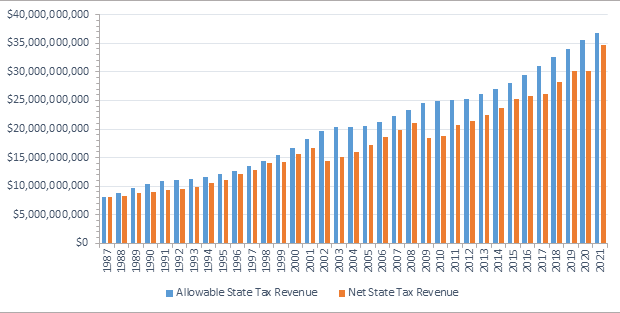 |
| A chart showing allowable tax revenues and net tax revenues since 1987. |
Franklin Health Dept. received 68 At-Home COVID-19 test kits. Call 508-570-8433 for a free kit & location pickup.
Limited Supply. 1 test per household member.
 |
| Town of Franklin - Health Department: COVID-19 Test Kits |
April is alcohol awareness month. 95,000 people die from excessive alcohol use in the U.S. each year.
Learn more at: www.cdc.gov/alcohol

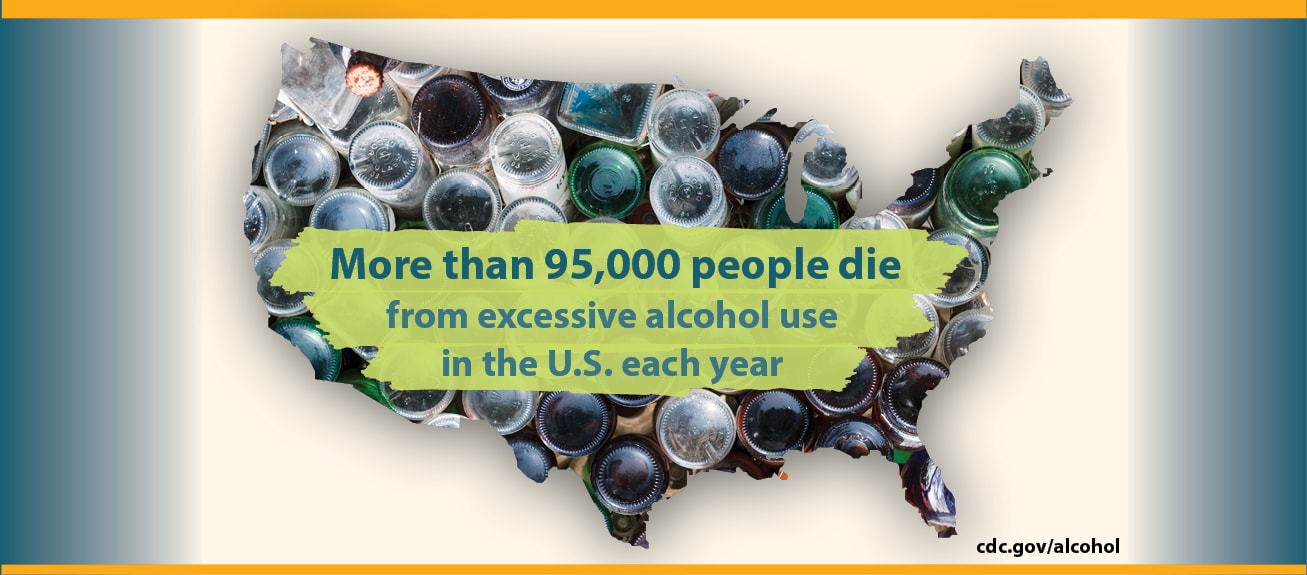 |
| Weekly Wellness Update - April is alcohol awareness month |
The weekly FPS COVID-19 dashboard is now available to view here: buff.ly/3pQh91e
 |
| weekly FPS COVID-19 dashboard |
 |
| From the MA DPH report |
 |
| Town of Franklin COVID-19 Health Dept |
"February's National Health Observance is Heart Disease. Heart disease is the leading cause of death in men and women. Learn how to reduce your risk at: https://www.heart.org/"

 |
| Health Department update: National Health Observance - heart disease |
"Why Public Health Faces a Crisis Across the U.S."
"State and local public health departments across the country have endured not only the public’s fury, but widespread staff defections, burnout, firings, unpredictable funding and a significant erosion in their authority to impose the health orders that were critical to America’s early response to the pandemic.While the coronavirus has killed more than 700,000 in the United States in nearly two years, a more invisible casualty has been the nation’s public health system. Already underfunded and neglected even before the pandemic, public health has been further undermined in ways that could resound for decades to come. A New York Times review of hundreds of health departments in all 50 states indicates that local public health across the country is less equipped to confront a pandemic now than it was at the beginning of 2020."
 |
| Yana Paskova for The New York Times |
"The United States owes its existence as a nation partly to an immunization mandate.In 1777, smallpox was a big enough problem for the bedraggled American army that George Washington thought it could jeopardize the Revolution. An outbreak had already led to one American defeat, at the Battle of Quebec. To prevent more, Washington ordered immunizations — done quietly, so the British would not hear how many Americans were sick — for all troops who had not yet had the virus.It worked. The number of smallpox cases plummeted, and Washington’s army survived a war of attrition against the world’s most powerful country. The immunization mandate, as Ron Chernow wrote in his 2010 Pulitzer Prize-winning biography of Washington, “was as important as any military measure Washington adopted during the war.”
Continue reading the article online. (Subscription maybe required)"For the most part, people are looking for answers, but the cards are stacked against them in this digital world. Every health care provider has had that one ardent unvaccinated conspiracy theorist who refused to believe that COVID is real despite showing them their trashed lungs on the CT scan, all while they’re on high-flow oxygen. Anecdote holding the power that it does, that patient runs the risk of coloring our perception of all unvaccinated patients in this same light. But, instead, my charge to health care providers is this: Take a meaningful pause and ask, “How did this person get to this point?” And understand that their condition is in part due to the challenges of the common person trying to understand complex medical science and being influenced by those with alternative agendas.That same night, I diagnosed a young woman, with three young kids, with lung cancer. She was a smoker, and she knew that smoking can cause cancer. How is her situation any different from an unvaccinated person with COVID? How many of us would stand at the bedside in her tragic hour and berate her for smoking? How many of us would, upon learning of someone’s death from cancer, say flatly, “Served her right”? If she said. “I didn’t think it would happen to me,” would anyone really say, “Whelp, I hope you survive” as we walked out the room? These are statements I have heard said to or about unvaccinated COVID patients in a recent week. Clearly, this does nothing to foster that trusted relationship between a physician and their patient.When I asked my unvaccinated COVID patient what was keeping him from getting the shot, he said he had read online that the vaccine gets into your DNA and he was afraid of what that would mean. So I sat down on his bed and spent a few minutes drawing a picture of a cell and nucleus, and explained in simple terms how mRNA works and why his DNA is not at risk. His next question was, “How soon can I get the vaccine?” He then called his kids and told them the same, and they asked where they could get the vaccine. While not successful in every encounter, I’m optimistic about the ripple effect that these little wins may have. And damn it if we don’t need a win now and again. In our most fundamental charge, “doctor” means “teacher.” This is the year where we understand. This is the year where we teach."
 |
| Anti-vaccination protesters near Los Angeles City Hall on Aug. 14. Earlier that week, the City Council voted to require proof of vaccination to enter many public indoor spaces in the city. DAVID MCNEW/AFP VIA GETTY IMAGES |
|


