Providing accurate and timely information about what matters in Franklin, MA since 2007. * Working in collaboration with Franklin TV and Radio (wfpr.fm) since October 2019 *
The Franklin Agricultural Commission is looking for community members who want to help support the farms, farmland, and agricultural future of our town.
We need:
🌾 Associate & 3-Year Term Commission Members
Help advocate for agriculture and shape initiatives that support Franklin’s farms and agricultural community.
✍️ Grant Writer
Help research and write grant applications that could bring valuable funding opportunities to local farmers.
👩🌾 Farm Volunteers
Lend a hand at local farms with seasonal chores and projects. No farming experience required!
Come visit us at the Franklin Farmers Market on Friday Sept. 18!
Stop by our table, meet the Franklin Agricultural Commission, learn about our mission, and discover how you can make a difference in Franklin’s agricultural community.
Support local farms. Protect our farmland. Grow Franklin’s future.
Summer begins this weekend, and Franklin's farms are entering one of the busiest and most exciting seasons of the year.
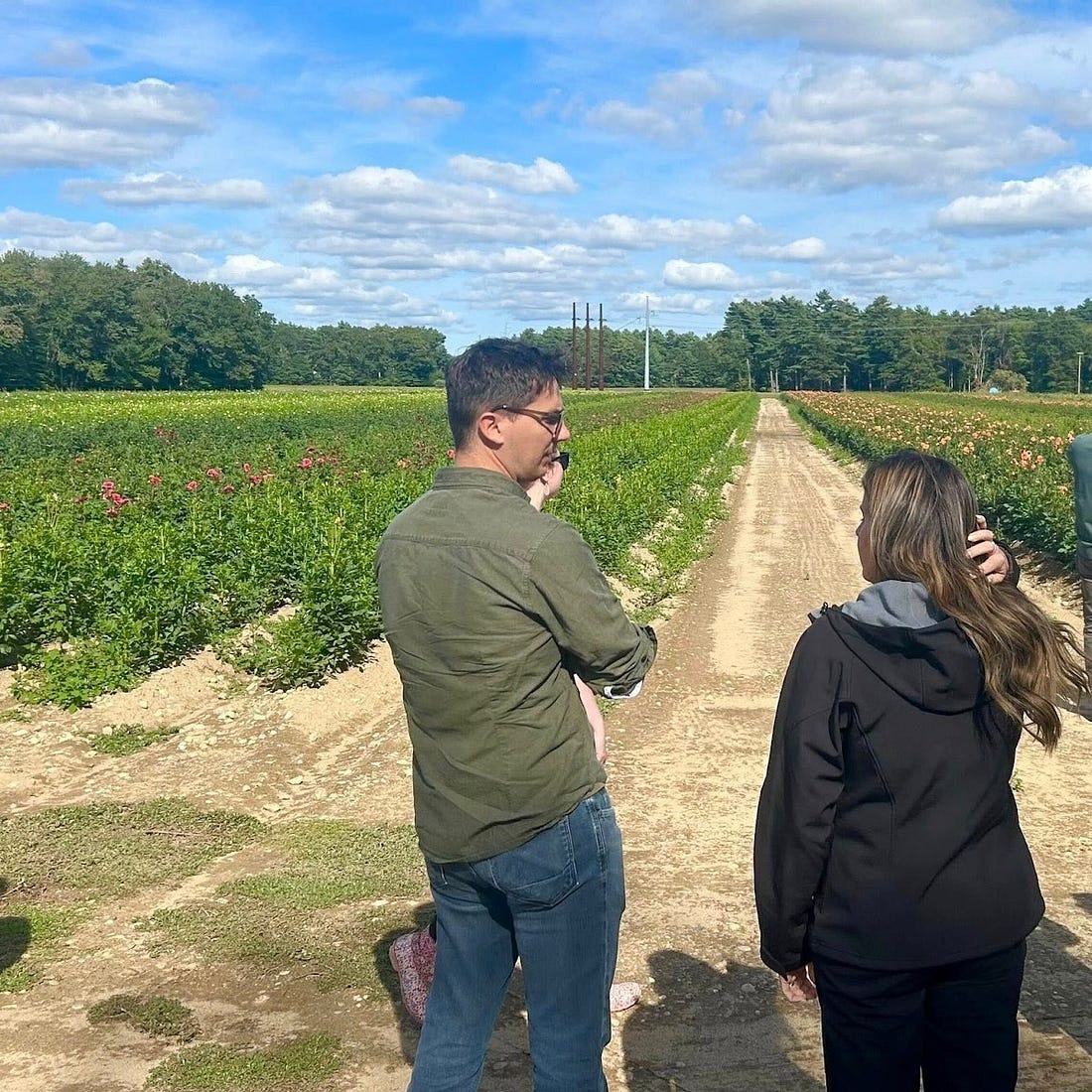
As fields continue to grow and farm stands begin offering fresh seasonal products, the Franklin Agricultural Commission invites residents to learn more about Franklin's farming community and the important role local agriculture plays in our Town.
Explore the Franklin Farm Finder interactive map to discover local farms, farm stands, and agricultural resources throughout the community:
From the Town Administrator's FY 2027 Budget narrative, each department's story is worth sharing.
General Purpose
Norfolk County Agricultural High School (NCAHS) is a public high school that offers academic and vocational training to over 600 students from the 28 towns and one city in Norfolk County and more than 40 out of county (tuition) towns. The school is situated on 365 acres in Walpole, a suburb of Boston, and offers specialty training to students who are interested in pursuing careers in Animal and Marine Science (veterinarian science, marine science, canine science, dairy and livestock management, research animal technology and equine studies), Plant and Plant Science (forestry, floriculture, landscape management, horticulture and natural resources, arboriculture and turf management), Environmental Science (climate change, natural resources, green engineering, environmental history, parks and recreation, New England wildlife, outdoor leadership, water treatment) and Mechanical Technology (diesel and heavy equipment operation and repair, welding woodworking). The school is one of four such schools in Massachusetts charged with promoting agri-science and agri-business opportunities.
Norfolk Aggie provides hands-on education in a welcoming and friendly environment and provides many clubs, sports and outdoor activities for the students. For more information about the Norfolk Agricultural School please click here https://www.norfolkaggie.org/.
Franklin currently has 18 students attending Norfolk County Agricultural High School.
Core Functions
●Norfolk County Agricultural High School uniquely provides an academic and agricultural science vocational experience, with hands-on learning for passionate students from diverse communities.
FY27 Requested Budget Highlights
●Tuition for the 2025-2026 school year for each student attending is $5,501.00 per student. Base Rate of $3,800 and separate capital assessment of $1,701 per student.
From the Town Administrator's FY 2027 Budget narrative, each department's story is worth sharing.
General Purpose
The Town Council established the Franklin Agricultural Commission per Special Legislation to promote, develop, and foster agricultural resources in the Town of Franklin. The Commission consists of five Members with three-year terms. Members shall be residents of Franklin and at least two members shall be active farmers, employed in an agriculture-related field, or have experience and knowledge in agricultural practices of business. The Commission is also able to have two Associate Members with 1-year terms.
Staffing
●Five (5) Volunteer Members
○Includes: One (1) Chair
○Includes: One (1) Vice Chair
FY27 Requested Budget Highlights
●This is a level-funded budget.
●The Commission hopes to continue to provide education and outreach of Franklin arms and supporting the local economy, expand the Franklin Farmer’s Market with the market coordinators, research the potential of becoming a right-to-farm community and expand community garden beds.
Note: Senior Center checking on why their events are suddenly being shown as "All Day". You can use the monthly newsletter for specific program/event times
As the descendant of Falmouth strawberry farmers, I know how important agriculture is for a healthy food system and the thousands of Massachusetts families who depend on it.
My great-grandparents were among the many Azorean Americans who farmed Falmouth's strawberry fields. At its peak, before World War II, Falmouth produced more strawberries than any town in the country. Today, that legacy endures in a single remaining farm: Tony Andrews Farm, now stewarded by the town.
This decline is visible across the Commonwealth. Since 1945, the number of farms in the state has declined from 35,000 to about 6,000. Much of that farmland has been developed into shopping centers, industrial parks, and housing—reflecting a changing economy and the cost of limited land.
What's Happening
Even as these changes reshape our landscape, the need for a sustainable food system remains constant. With emerging threats like climate change and supply chain disruptions, it's imperative that we act to support healthy, locally grown food.
Massachusetts is home to more than 7,000 farms and fishing operations, spanning 500,000 acres—10 per cent of the state's land—and generating over $10 billion in economic activity. The FARM Bill will help preserve and strengthen this industry which supports our economy, feeds our families, and contributes to a sustainable future.
One key provision requires the Massachusetts Emergency Management Agency (MEMA) to develop a plan to support agriculture, seafood, and processed food during emergencies to mitigate food supply chain disruptions. In crises like storms and pandemics, producers often lose access to markets and can't transport goods. This provision will ensure that farms and fisheries can continue operating, treating them as essential infrastructure rather than an afterthought.
The FARM Bill also codifies key programs that support local agriculture and public health. The Healthy Incentives Program(HIP) helps residents purchase fresh produce from local farms. The Food Security Infrastructure Grant (FSIG) program strengthens supply chains and expands access to local foods. The FRESH program helps schools and early education centers increase local food purchasing. This legislation makes these programs permanent.
Additionally, the bill directs the state to make recommendations for increasing the use of local food in assistance programs, creating stable markets for farmers while strengthening supply chains and supporting fresh, local food.
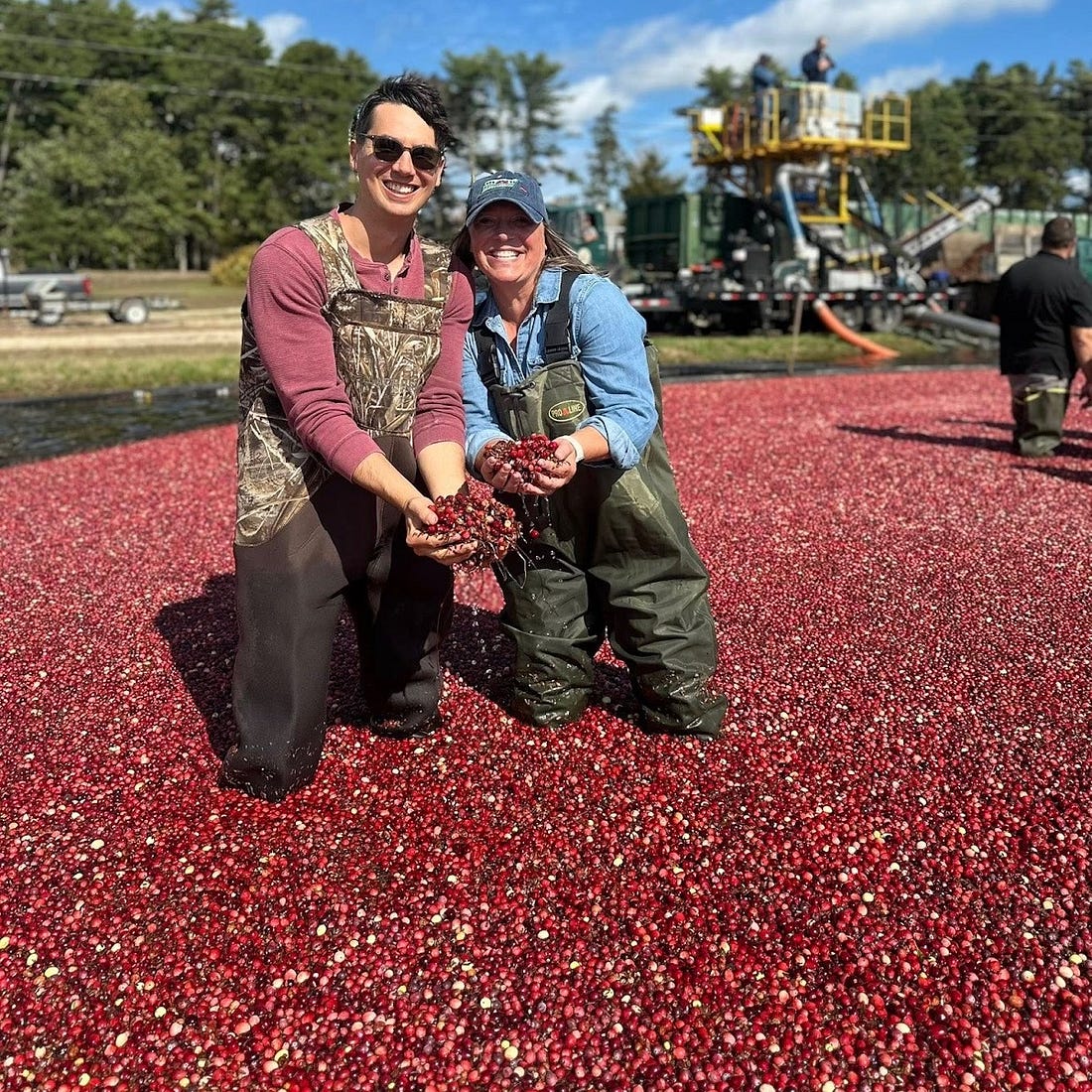
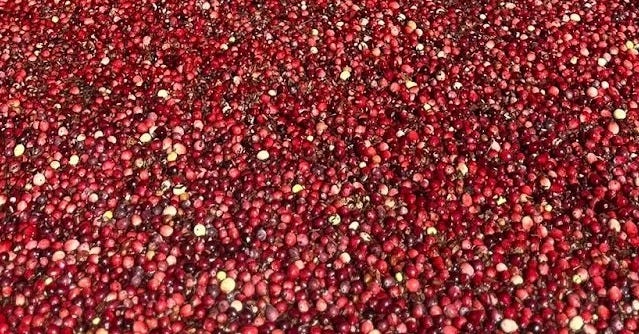
The FARM Bill also supports our cranberry industry, Massachusetts' most valuable agricultural product. The Cranberry Revitalization Task Force, which includes colleagues like Senate Ways and Means Chair Michael Rodrigues and former Senator Vinny deMacedo, recommended we adopt language empowering cranberry bog farmers to transfer their Water Management Act permit rights. That language, filed inSenate Bill 602, An Act relative to cranberry water use transfer program, is included in this legislation.
The FARM Bill is about resilience—ensuring our farmers and fishermen can withstand disruptions, our land and water remain productive, and our food system is prepared for future challenges. By investing in farming families, we support a more secure and sustainable future for the Commonwealth.
While Falmouth may no longer be the strawberry capital of the United States, Massachusetts continues to invest in its agricultural future through legislation that protects and strengthens our farmland for generations to come.