Showing posts with label banking. Show all posts

Sunday, May 17, 2026

Steve Ballmer explains the Federal Reserve (video)


Just the Facts on the Fed
 
The newly confirmed Fed Chair Kevin Warsh is beginning his tenure as head of the Federal Reserve. The Fed is the nation's central bank, but you can’t walk into a branch to open a checking account. Instead, the Fed's decisions can make your car payments cheaper or a job harder to find.
 
So how does the Fed work? Glad you asked! USAFacts Founder Steve Ballmer just dropped this new video on the Fed and we couldn’t wait to share it with you. 
Join Steve as he breaks down the Federal Reserve's complex role in the American economy. He'll break down complicated concepts, provide visuals to shed light on the institution, and even make a few costume changes. 
 
This is the first Spotlight edition of the USAFacts newsletter, which we’ll send when we have a cool new way to explore data with you. You can expect to get them about once a month. 
 
Here's a preview of what you'll find in the video, plus data to understand the Fed's role in your economic well-being:  
The Federal Reserve is the most important bank you’ll never use.
  • It’s a bank for banks. It holds cash reserves, moves money between banks, and can lend to them whenever needed.

  • The Fed has five responsibilities. The one that affects you most directly is its mandate to conduct monetary policy to keep inflation in check and employment high. Through it, the Fed can influence interest rates across the entire economy. (Here are the other four.)  
Speaking of inflation
  • When the Fed lowers interest rates, it can lead to the running economy “hot.” It can make it cheaper for you to buy a house, get a car loan, or borrow money to open a business. But if money’s easier to borrow, it can fuel inflation.

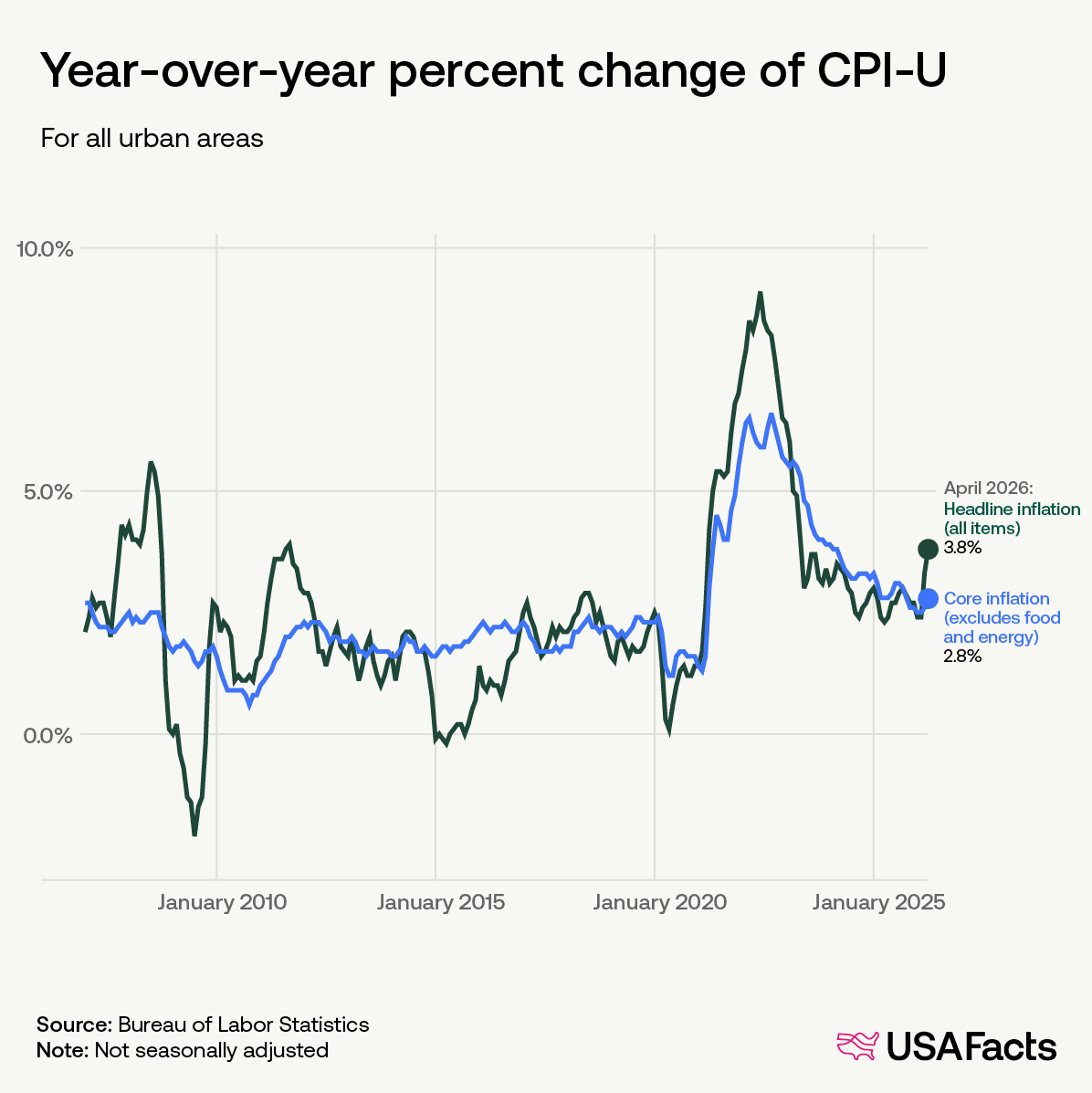
  • Last month’s inflation rate was 3.8%. The Bureau of Labor Statistics measures inflation through changes in the Consumer Price Index (CPI), a metric designed to track the price of a “basket of goods and services.” 
  • Think a dollar doesn't go as far as it used to? You're right. Track how the dollar’s value has changed with our inflation calculator! Explore the value from 1913 to now, or at any point in between.

  • Workers’ wages aren’t keeping up with inflation. Nominal wages rose 3.6% from April 2025 to April 2026, while prices grew 3.8%.

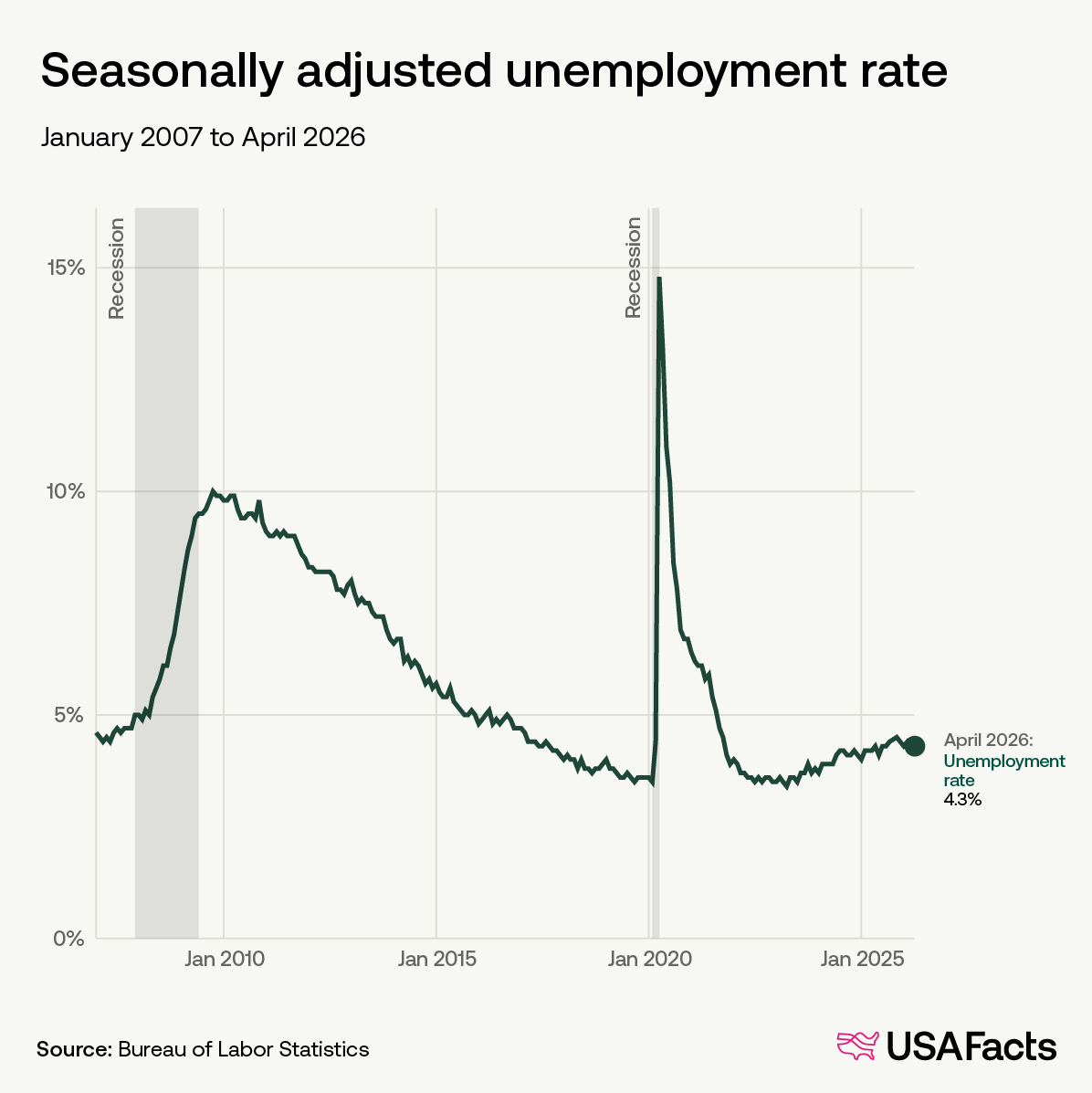
  • When the Fed raises interest rates, it can lead to the economy running “cold,” making things more expensive and slowing inflation. When borrowing is hard, it can slow the economy and drive up unemployment.  
How the Fed influences interest rates
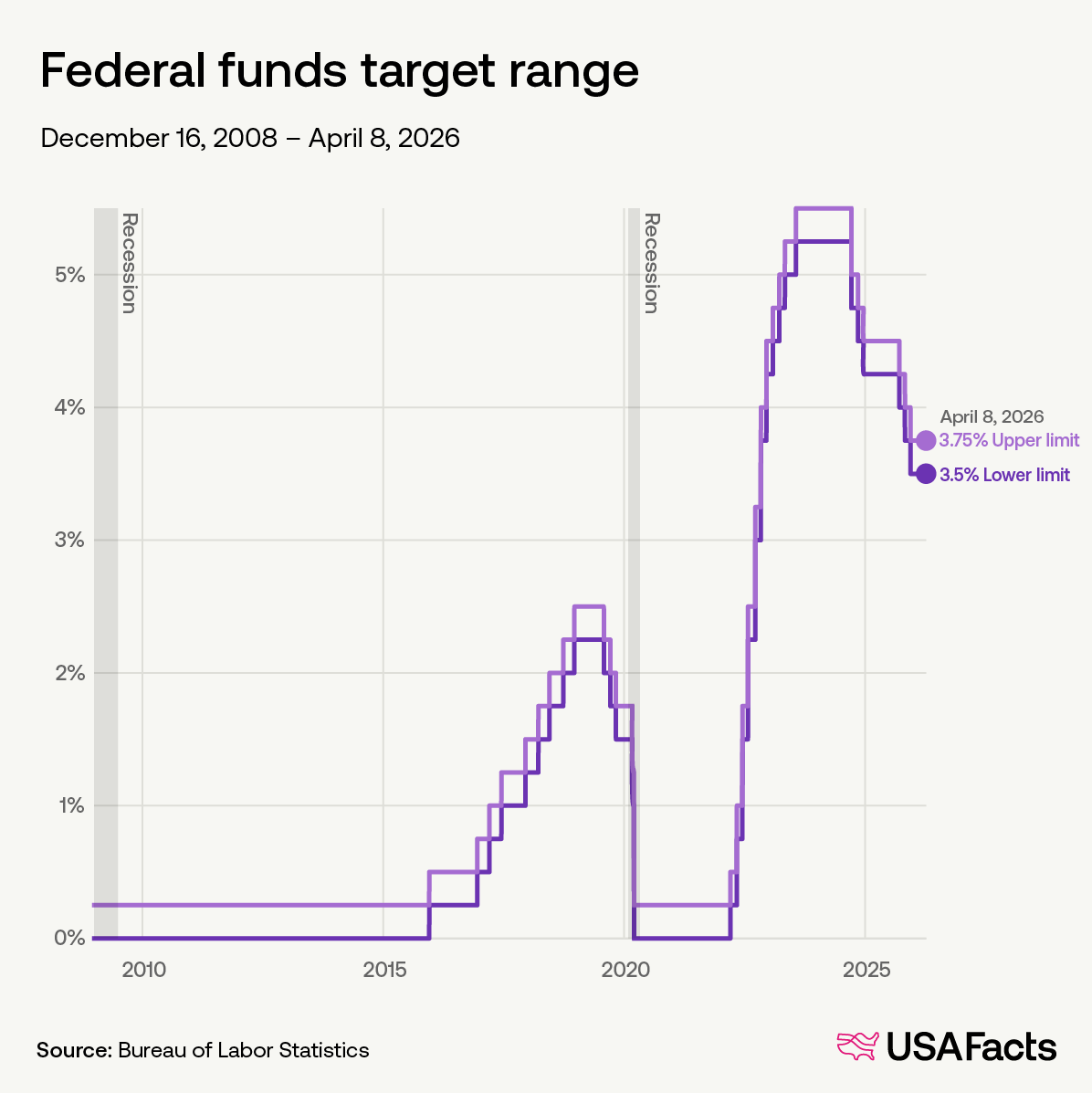
  • The Fed changes the interest it charges on loans it gives and pays on other banks' cash reserves it holds, effectively setting the limits at which other banks can charge interest. The average overnight rate at which banks transact is called the federal funds rate. Get a jargon-free explanation of the federal funds rate from Steve himself.
  • If the Fed raises the federal funds range, your bank’s costs go up. Your bank might raise interest rates on new loans. Mortgages, car loans, credit cards, and short-term business loans all get more expensive. That can ripple across the economy: people buy less, inflation can decrease as demand falls, less demand means companies may need fewer workers — causing unemployment to rise.

  • The federal funds rate target range has changed about 30 times in the last 10 years. In 2022, inflation climbed well above the Fed’s 2% goal. In response, the Fed raised the federal funds target range seven times in a single year. 
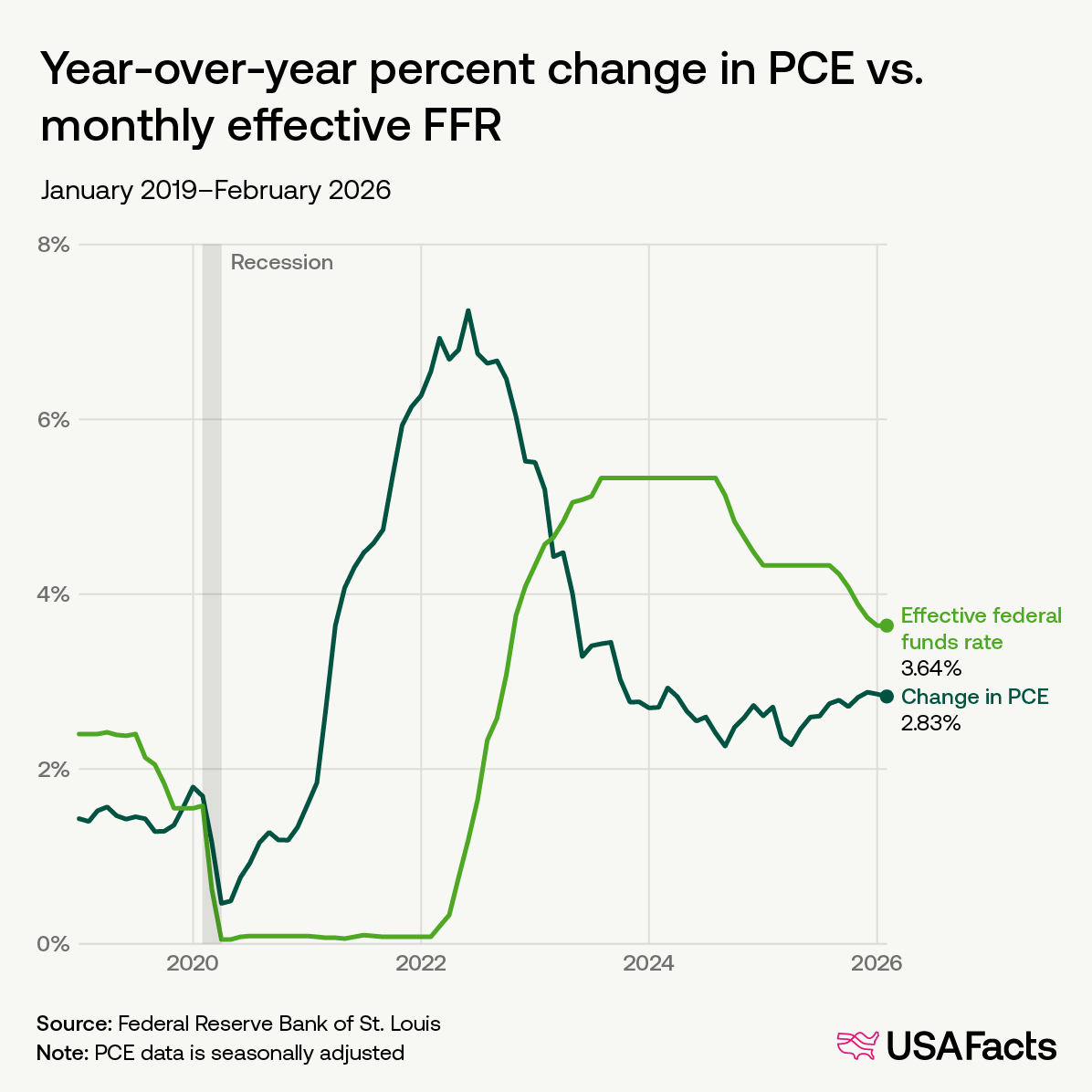
  • The Fed uses the Personal Consumption Expenditures Price Index (PCE) to measure inflation. The PCE tracks changes in the prices consumers pay across the economy. This differs somewhat from the CPI (the inflation measure most Americans are familiar with) because the two indexes use different methods and baskets of goods and services to calculate price changes.

  • Sometimes interest rate changes aren't enough, so the Fed uses other tools. One of them is to create money. (Sounds nice, right?) Here’s how
 
Thank you for joining us for this first Spotlight email! Watch the video now, then learn more about the Federal Reserve


Was this email forwarded to you? Sign up here for your own weekly issue of the USAFacts newsletter.

Copyright© 2026 USAFacts All Rights Reserved. PO Box 1558 Bellevue, WA 98009-1558

Wednesday, March 4, 2026

Dismantling the FDIC??? What?

One if the many nightmares from Project 2025 is happening quietly in the background and we're so distracted by the insanity, we don't even realize it. 

Been down the rabbit hole and followed links to sites like https://ncua.gov/news/deregulation-project where you'll find that credit unions are in the middle of a deregulation project based off of one of Trump's executive orders. If you read the substack below, you'll see this is all from the Project 2025 playbook. 

Regulations exist to protect the consumer, you, us, we the people. And without those regulations, banks will do whatever shady shit they feel like to make sure THEIR bottom dollar increases, not yours. 

There is something we can do though. They make policy change proposals that are open to the public for comment. We can go tell them that we don't want deregulation. They have one up to remove verbiage about refunding interest to you. They say it's duplicative, well, ask yourself why? Why would they have duplicative verbiage on something like that unless it was because there were gaps or loopholes in the original verbiage which wasn't in favor of the consumer?

Do we know that 100% for sure? No. But this admin has worked for a large bank and knows they don't duplicate anything, they cover tracks. There's another proposal to remove regulations for reputational risk. 

Sounds like no big deal, but do you remember the Wells Fargo scandal, when they were caught creating accounts in people's names without permission so branch workers could meet goals? The massive loss in confidence from the public that came from that, THAT is reputational risk. So what do you think they will try to get away with if there's no regulations?

You have a voice in so much more than just calling your reps. Go read through some of these proposals and leave comments. Especially if you bank with a credit union. (We'll look into other websites for regular banks to see if there's a similar option and post if we find anything.)

This is not to fear monger, this is to educate. There's history in that substack showing how these exact plays line up with previous financial collapse across the world. We can't let them slip quietly into the night and rob us blind without talking about it. This is the game plan.

"Flood the zone" with so much chaotic shit every day that stuff like this falls under the radar and people have no idea until it is too late. Well, now you know, and you know you can do something about it so they don't get away with it.