Showing posts with label battery. Show all posts

Thursday, April 2, 2026

Excerpts from Citizen Comment to Franklin Town Council, Weds, April 1, 2026

This is only my second time in over 20 years of living in Franklin coming to speak before the Town Council. I usually stick to education related matters, but I feel compelled to speak up once again on yet another potential environmental hazard that would negatively affect a large number of Franklin citizens, namely the recent proposal for a Battery Energy Storage System (BESS) by the town of Bellingham and the Zero Point Development Corporation.

I am *extremely* concerned about the location selected for the Battery Energy Storage System (or BESS) being proposed by the town of Bellingham. This land—previously home to the old contaminated mill on Pearl Street—is an EPS Brownfields site. It is located directly next to highly populated Franklin neighborhoods, conservation land, and the Charles River. The proposed location is highly problematic as it poses significant health risks by disturbing this contaminated site, fire risks especially given our ongoing water drought status, noise and traffic concerns, and negative environmental impacts. 

As you know Pearl street in Bellingham becomes Beech Street in Franklin when the road crosses over the Franklin town line. This is a densely packed residential neighborhood that includes all of Hawthorne Village and Dover Farms as well as Beech Street, Plain Street, Pond Street, Pine Street, and dozens of side streets that branch off of these major roads. I do not know exactly how many Franklin families live within a mile radius or even a half mile radius of this proposed site, but it is surely in the hundreds if not thousands. In fact, there is a yellow traffic sign posted right in front of the proposed site warning drivers that it is a “thickly populated area”. Another identical sign is also posted in the other side of the street. 

As you may be aware the town of Bellingham only notified people living within 300 feet of the proposed battery system, so you can only imagine how challenging it has been to get the word out to everyone who will actually be affected if this comes to fruition. 

These large batteries are going to start popping up everywhere. I understand that. However, a large densely packed residential neighborhood is NOT the place for this. It poses great disturbance and safety threats to residents of both towns, especially with regards to noise issues, traffic issues, health issues, environmental issues and potential fire hazard issues given our limited water supply. Please take a few minutes to drive by the location and see just how close this site is to many Franklin neighborhoods and the Charles River.

What are the concerns? First, there is the obvious noise issue for families living in the area. Franklin families  already can hear noise and feel vibrations from the recently built power plant in Medway. This proposed site is even closer to Franklin families. I can only imagine how loud and unpleasant the noises and vibrations will be. 

There are also significant fire risks—these Battery Energy Storage System fires are too dangerous for fire personnel to fight and are often left to burn out on their own destroying whatever is in the vicinity. A recent fire in California involved evacuating homes in a 2 mile radius. Once the fire finally extinguished, all of these homes were deemed uninhabitable because of the toxic particles and debris. Imagine this, and then also plus add in the toxicity inherent in a fire at a contaminated Brownfields site. In fact, a retired local fire department chief has already publicly spoken out against the proposal because of the significant fire and safety concerns of the location. 

In addition to fire concerns, there are many other issue, not the least of which is this is an EPA Brownfields site of the highest level of contamination. In the past, Bellingham has proposed a variety of other potential uses for this contaminated land, including senior housing, a park with bike paths, etc.  and determined the area was too contaminated to be safe for people to use. Why then would we want to disturb that land now and dig up who knows what kinds of toxicities to send into the environment and nearby neighborhoods? 

Moreover, this site directly abuts a part of the Charles River. Any contamination from this site will directly leech into our water system.

This land also directly abuts Franklin’s conservation land located on Plain Street. This is a protected habitat of endangered species and delicate ecosystems that will surely be disrupted should this large battery be built directly adjacent.

And then there’s the increased traffic. How many extra trucks will now travel from (the former) exit 17 in Franklin, down Pond Street and Beech Street to access this battery facility? We just paved Pond and Beech streets, and this increased traffic will only add to the many traffic issues in the area. 

So given the many concerns, how and why is this even being proposed in a residential neighborhood? Without going too far into the underlying politics involved, the town of Bellingham has legal and financial incentives to participate. There is a long history of legal issues, special permits, bylaw issues and more regarding this land. 

In addition, the politicians who are supposed to look out for and advocate on behalf of the interests of the residents of these towns have received money in the form of donations from the company Zero Point Development Corp. I’ll let you look into which politicians have accepted their donations, but it certainly complicates the situation significantly and calls into question the underlying conflicts of interest as to their ability to advocate effectively on behalf of the well-being of the very citizens they are elected to represent. Further muddying the water, one or more of these politicians is also personally involved with the lobbyist who lobbies on behalf of these large Battery Energy Storage Facilities.  

So what does Franklin gain from this? Nothing, except negative impacts, decreased property values, and significant risks to safety, health, fire, noise, traffic, and the environment. 

What can you the Town Council of Franklin do to advocate on behalf of the hundreds? thousands? of residents who will be significantly impacted by this proposed Battery Energy Storage System? 
  1. At the very least please write a letter signed by the entire Town Council expressing your concerns about this proposed location and how it will negatively affect the citizens of Franklin.
  2. Request that any such Battery Energy Storage System be built no closer than a half mile from the nearest Franklin residential homes and schools. 
  3. Attend the MEETING on APRIL 2ND @ 7 PM  at BELLINGHAM TOWN HALL to show your support of Franklin residents and express your concern. 
  4. For our Town Administrator and chair of Town Council, PLEASE make the time to talk to the woman who has thoroughly researched the issues and hear about the many issues and political implications of this proposal. (Contact information shared separately.) 
  5. And, finally, please take the time to talk with Franklin Fire and emergency response personnel about how this would play out in Franklin should a large Battery Energy Storage System Fire occur. 
There is legislation pending that would require any BESS to be located NO CLOSER THAN 2000 FEET from the nearest residence. I am hopeful this will help in our particular situation, but also extremely concerned that some of the politicians who will be voting on this have already received money from, and/or have a serious personal conflict of interest with regards to this situation. 

In closing, these large Battery Energy Storage System facilities are going to be popping up all over the commonwealth—they offer financial incentives that financially fledgling towns will have a hard time ignoring. Franklin has always led by example—let’s continue to lead by example by demanding these batteries be placed in appropriately industrial locations located a safe distance away from neighborhoods and schools. 

Thank you for your consideration.

Selena Cousin
114 Beech Street


If you have something to say, you can find the guidelines here
https://www.franklinmatters.org/2011/03/introducing-voices-of-franklin.html


Note: Town Administrator Jamie Hellen added that the 300 ft abutter notification is MA General Law that communities do follow. He also noted that at a Town Meeting the Town of Bellingham voted to pursue a battery storage facility as a use for the site. The Town of Bellingham is actually the sponsor of this proposal.


Excerpts from Citizen Comment to Franklin Town Council, Weds, April 1, 2026

Wednesday, April 1, 2026

A Note to Franklin Residents on the Bellingham Battery Storage Proposal from Councilor Maxwell Morrongiello

Councilor Maxwell Morrongiello
Over the past two weeks, I've heard from a number of Franklin residents with concerns about a proposed Battery Energy Storage System at 26 Pearl Street in Bellingham, just across the town line. I want to respond publicly because these questions deserve a thorough and honest answer.

What the project is:

The site is a 20-acre town-owned parcel that Bellingham put out to bid in 2020 and authorized through its own town meeting. Zero-Point Development was awarded the contract, and a ground lease has been in place since 2021. The developer filed a Special Permit application with the Bellingham Zoning Board in February 2026, which is the first step in a multi-stage process that will also include Bellingham's Planning Board, Conservation Commission, and MassDEP before anything can be built.

On the safety questions:

These are questions worth understanding, and I've looked into them carefully. The data on these facilities has improved significantly in recent years. According to the Electric Power Research Institute, the global failure rate for battery storage systems dropped 98% between 2018 and 2024, even as deployment grew dramatically. In 2024, roughly 0.3% of facilities experienced an incident with any safety concern, comparable to the annual rate of residential house fires. A 2025 review of 35 large-scale U.S. battery fires between 2012 and 2024 found no air, soil, or water contamination requiring remediation at any of them.

That said, the proximity to the Charles River is something I've noted. The developer's own site plan shows the facility sits within the state-mandated 200-foot Riverfront Area buffer zone, which triggers specific MassDEP oversight. The developer's design includes an automated containment system for fire water runoff, as MassDEP requires, but the adequacy of that system given the river's proximity is exactly the kind of question the Conservation Commission and MassDEP review stages are designed to scrutinize carefully. On noise, battery storage facilities do produce continuous fan noise, and Bellingham's Planning Board can and should require the developer to address this through noise barriers and overnight operational restrictions.

Franklin's role:

I want to be direct: this is a Bellingham decision about Bellingham-owned land, authorized by Bellingham's own voters. Franklin's Town Council does not have authority over another municipality's permitting process, and it would not be appropriate for us to insert ourselves formally. What I can tell you is that the Planning Board and Conservation Commission hearings ahead are exactly where community voices belong and where they can make a real difference. If you have concerns, I encourage you to attend those hearings and put them on the record.

I'll continue to stay informed as this develops, and I'm always available to hear from residents at mmorrongiello@franklinma.gov.

---

**Sources**

1. **Project site, ownership, RFP history, ground lease date, ZBA application date, acreage:** Bellingham Zoning Board of Appeals, Special Permit Application, ZPB 2020-030 LLC, received February 11, 2026.

2. **200-foot Riverfront Area buffer zone:** Site Layout Plan CS-101, ZPB-2020-030 LLC, 26 Pearl Street, Bellingham, MA, prepared by Fuss & O'Neill, dated June 18, 2025.

3. **98% failure rate reduction, 2018-2024:** Electric Power Research Institute (EPRI), cited in Massachusetts Executive Office of Energy and Environmental Affairs, *Battery Energy Storage Systems: Frequently Asked Questions on Fire Safety and Public Health*, mass.gov, February 2026.

4. **0.3% annual incident rate, comparison to residential house fire rate:** Camelot Energy Group, "Putting BESS Fires in Everyday Context," July 2024, cited in John Pepi, Alliance for Climate Transition, joinact.org, July 2025.

5. **35 fires (2012-2024), no remediation required:** Fire & Risk Alliance LLC and American Clean Power Association, *Assessment of Potential Impacts of Fires at BESS Facilities*, March 28, 2025.

6. **MassDEP containment requirements, automated shutoff valve:** ZPB 2020-030 LLC / Zero-Point Development, Project Narrative, 26 Pearl Street, Bellingham, MA (submitted to Bellingham ZBA, February 2026).

7. **Noise mitigation standards:** Massachusetts DOER/EFSB, *Guidance on Electric Battery Storage and Electric Vehicle Chargers*, August 2025, mass.gov.

Monday, October 9, 2023

First Monday, gas pipeline expansion, bikes & batteries are covered in this Making Sense of Climate episode #33 (audio)

FM #1072 = This is the Franklin Matters radio show, number 1072 in the series. 


This session of the radio show shares my conversation with Ted McIntyre, Franklin resident and climate activist via the Zoom conference bridge Monday, October 2, 2023.  

In this episode we cover the following topics

  • First Monday in October

  • Gas pipeline expansion

  • Bikes and batteries

Links to the articles we talk of are collected below.   

This discussion continues our journey understanding the MA roadmap toward net zero and while it helps me “make sense of climate”, we hope it helps with your understanding as well. 

If you have climate questions or Franklin specific climate questions, send them in and we’ll try to answer them in a future session.  

The conversation runs about 49 minutes. Let’s listen to my conversation with Ted as we help ‘make sense of climate.’ Audio file -> https://franklin-ma-matters.captivate.fm/episode/fm-1072-making-sense-of-climate-33-10-02-23


--------------


Links to articles referenced:

First Monday.in October…SCOTUS may rule on Chevron Deference… Thomas is bought?

https://www.propublica.org/article/clarence-thomas-secretly-attended-koch-brothers-donor-events-scotus


I hope to get these guys on a podcast, but we can tease the topic.

https://www.bostonglobe.com/2023/09/29/opinion/hanscom-airport-jet-expansion-massport/


Gas Pipeline expansion… 11/2029…goes very close to Franklin

https://www.wbur.org/news/2023/09/22/enbridge-weymouth-compressor-natural-gas-fossil-fuel-climate-change-pipeline-expansion


Wasser on podcast

https://www.wbur.org/the-common/2023/09/28/enbridge-pipeline-expansion-natural-gas-ferc


Franklin Matters archives have quite a few references to the Atlantic Bridge project

https://www.franklinmatters.org/search?q=atlantic+bridge 


Bikes and batteries

https://www.euronews.com/next/2023/09/20/this-french-company-has-designed-the-first-e-bike-that-doesnt-need-a-battery


Role of batteries is growing..

https://www.canarymedia.com/articles/energy-storage/grid-batteries-have-never-been-more-abundant-or-more-useful


** See the page that collects all the “Making Sense of Climate” episodes -> https://www.franklinmatters.org/2022/02/making-sense-of-climate-collection.html 

--------------


We are now producing this in collaboration with Franklin.TV and Franklin Public Radio (wfpr.fm) or 102.9 on the Franklin area radio dial.  


This podcast is my public service effort for Franklin but we can't do it alone. We can always use your help.


How can you help?

  • If you can use the information that you find here, please tell your friends and neighbors

  • If you don't like something here, please let me know


Through this feedback loop we can continue to make improvements. I thank you for listening.


For additional information, please visit www.franklin.news/ or  www.Franklinmatters.org/ 


If you have questions or comments you can reach me directly at shersteve @ gmail dot com


The music for the intro and exit was provided by Michael Clark and the group "East of Shirley". The piece is titled "Ernesto, manana"  c. Michael Clark & Tintype Tunes, 2008 and used with their permission.


I hope you enjoy!

------------------


You can also subscribe and listen to Franklin Matters audio on iTunes or your favorite podcast app; search in "podcasts" for "Franklin Matters"


First Monday, gas pipeline expansion, bikes & batteries are covered in this Making Sense of Climate episode #33 (audio)

Wednesday, January 11, 2023

We drove around New England looking for EV chargers (and the best doughnuts). It was easier than we expected. - The Boston Globe

"In Massachusetts, the share of registrations for electric cars has more than tripled since 2019 and represents 5 percent of all new cars registered in 2022. It’s a similar story across New England and across the country.

But there’s one big adjustment to owning an electric car: EV drivers cannot rely on the century-old ecosystem of a gas station around every corner. Instead, they need to plan their trips based on the availability of a growing but still spotty network of charging stations. Tesla has built its own network of widespread and speedy chargers but, at least for now, they’re only accessible to Tesla EVs.

The build-out of charging infrastructure is critical if the region wants to successfully entice millions of car owners to make the switch to electric and slash climate-warming emissions. After all, drivers aren’t likely to ditch their gas vehicle if they’re going to have to worry constantly about running out of charge.

To test the current state of EV infrastructure, we took off on a 400-mile road trip across New England in two typical — but quite different — electric cars. One of us (Aaron) drove a Kia Niro EV purchased a year ago while the other (Sabrina) rented the flashy Tesla Model 3 Performance."

Continue reading the article online at the Boston Globe -> (subscription may be required)  https://www.bostonglobe.com/2023/01/10/science/we-drove-around-new-england-looking-ev-chargers-best-doughnuts-it-was-easier-than-we-expected/


Aaron Pressman and Sabrina Shankman at Donut Dip in West Springfield while on their journey traveling New England in EVs.CARLIN STIEHL FOR THE BOSTON GLOBE
Aaron Pressman and Sabrina Shankman at Donut Dip in West Springfield while on their journey traveling New England in EVs. CARLIN STIEHL FOR THE BOSTON GLOBE

Sunday, October 9, 2022

Now that the Climate bill was signed, what's next? State Rep Jeff Roy joins Ted & I to answer that question and more (audio)

FM #859 = This is the Franklin Matters radio show, number 859 in the series. 


This session of the radio show shares my conversation with Ted McIntyre, Franklin resident and climate activist. We recorded this via the Zoom conference bridge Monday, October 3, 2022.  

We are joined by our special guest, MA State Representative Jeff Roy. The last time Jeff was with us (August) we were all waiting for the governor to take action on the recent climate legislation. It had worked its way through the MA House & Senate, the Conference Committee, back through both the MA House & Senate and sat on Governor Baker’s desk until he did sign it.

In this episode our conversation covered the following topics: 

  • legislation passed, signed, now what's next

  • electric rate, municipal aggregation, home electricity monitoring

  • Site visits; White House, Schneider Electric, Andover; Millstone Nuclear Plant in CT

  • MassSave options

This discussion continues our journey understanding the MA roadmap toward net zero and while it helps me “make sense of climate”, we hope it helps with your understanding as well. 

If you have climate questions or Franklin specific climate questions, send them in and we’ll try to answer them in a future session.  

The conversation runs about 53 minutes. Let’s listen to my conversation with Ted and State Rep Jeff Roy.


Audio file ->   
https://franklin-ma-matters.captivate.fm/episode/fm-858-ma-state-representative-jeff-roy-10-04-22


--------------


Mass Save to sign up for an energy audit -> https://www.masssave.com/ 


White House visit -  https://twitter.com/jeffroy/status/1570067557687738370 


Millstone Nuclear plant visit ->https://twitter.com/jeffroy/status/1576180037132292096   


See the page that collects the “Making Sense of Climate” episodes -> https://www.franklinmatters.org/2022/02/making-sense-of-climate-collection.html 


--------------

We are now producing this in collaboration with Franklin.TV and Franklin Public Radio (wfpr.fm) or 102.9 on the Franklin area radio dial.  


This podcast is my public service effort for Franklin but we can't do it alone. We can always use your help.


How can you help?

  • If you can use the information that you find here, please tell your friends and neighbors

  • If you don't like something here, please let me know


Through this feedback loop we can continue to make improvements. I thank you for listening.


For additional information, please visit Franklinmatters.org/ or www.franklin.news/


If you have questions or comments you can reach me directly at shersteve @ gmail dot com


The music for the intro and exit was provided by Michael Clark and the group "East of Shirley". The piece is titled "Ernesto, manana"  c. Michael Clark & Tintype Tunes, 2008 and used with their permission.


I hope you enjoy!

------------------


You can also subscribe and listen to Franklin Matters audio on iTunes or your favorite podcast app; search in "podcasts" for "Franklin Matters"


Tuesday, September 13, 2022

“It’s a pretty cost-effective solution”

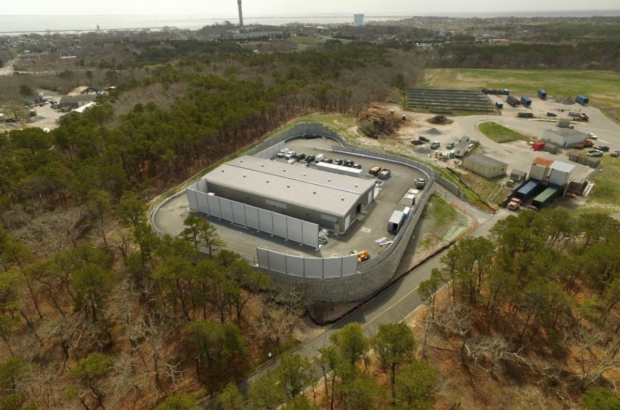
"ONE OF THE LARGEST electric batteries in the nation is starting to provide backup power for Provincetown and will soon do the same for Truro and part of Wellfleet.

The $49 million battery, located on a few acres at the Provincetown transfer station, is designed to seamlessly integrate with the power grid in the area, called a microgrid. Whenever power goes down in a section of the grid, the battery will release its backup electricity to plug the gap.

The Provincetown battery was envisioned as a cheaper way to meet the reliability needs of the area. Currently, the area is served by a lone distribution line spinning off of a transmission line that ends 13 miles away in Wellfleet. Officials said building a new backup distribution line over that 13-mile stretch would have cost significantly more and it would have been partially routed through the Cape Cod National Seashore, raising a host of environmental issues."
Continue reading the article online 

Electric battery facility at Provincetown transfer station. (Photo courtesy of Eversource)