Providing accurate and timely information about what matters in Franklin, MA since 2007. * Working in collaboration with Franklin TV and Radio (wfpr.fm) since October 2019 *
"Think about the disease that worries you most — the one that runs in your family. Or, maybe, someone you love is living with it. Whether that’s cancer, Alzheimer’s, diabetes, or depression, odds are the US government has been funding the research to treat it.
That research is a big reason we have drugs that made fatal blood cancers survivable, treatments that turned HIV from a death sentence into something people live full lives with, and a vaccine that all but prevents cervical cancer.
But, last year, the US funded dramatically fewer grants to do medical research that can lead to breakthroughs like those. New data released by the NIH this week shows how the damage from those cuts broke down. The numbers are striking across the board."
I had the opportunity to witness some of the 8th grade Capstone Project presentations at Benjamin Franklin Classical Charter School recently. 49 presentations in about 4 hours over 2 sessions.
Some of the 8th graders were nervous about speaking to the large gathering of parents, teachers, guests, and fellow students. Some spoke rapidly to get it over with. Some proceeded more calmly presenting on their project.
Their project topics ranged across a large variety of topics. Some close to home
Comfort kits for hospital patients, including children
Support for the homeless
Support for animal rescue
And some with an even broader reach
Light pollution
Marine animal health
Genetic disorders
Teen suicide
This selection can only highlight the breadth of the issues their projects researched.
Unlike the diversity of the projects, the student project experiences were similar. Many faced procrastination issues, and were hindered by a lack of response from key contacts at the subject organizations. Many adjusted their scope to complete the project, many learned better time management, and many built confidence from repeating the explanation of what their project was about.
A common theme I found was that a small effort can have a big impact. Some learned that better messaging could get the attention of the adults in authority at the organizations. Students also learned that while it is unfortunate, some political views do hinder making progress on really human issues.
Given that many of the students faced constraints with lack of resource time (much of it their own), a future consideration might be to enable collaboration among 2 or 3 students. Working together on their similar interests, they could perhaps accomplish more, and learn the keys to successful collaboration. This alone would be a good skill for life beyond 8th grade.
The students were not bashful in thanking all those who helped them along the way, teachers, family members, and friends. It does take a village.
Franklin Town Councilor Stephen Malloy was in one session with me and shared his reflection:
“Congratulations to the BFCCPS eight graders for completing their Capstone projects. I was able to attend three sessions and was very impressed at the range of organizations that were helped, the resiliency shown by the students during their year plus long efforts, and the quality of the public presentations. This is a fantastic program. Great job everyone.”
Town Councilor Max Morrongiello shared his reflection:
"I'm impressed by Benjamin Franklin Charter Schools commitment to educating well rounded citizens. I was also impressed with the amount of students who prioritized self- improvement and self-care, which is critically important in these trying times."
State Representative Jeff Roy shared his reflection:
"It was a profound honor to witness the dignity and professionalism displayed by the 8th graders at Benjamin Franklin Classical Charter Public School during their superb Capstone presentations," said Rep. Jeffrey Roy (D-Franklin). "From tackling the complexities of cancer research and suicide awareness to advocating for animal protection, food insecurity and so much more, these students addressed our world’s most pressing challenges with remarkable maturity. The depth of research and the poise with which these students presented their findings reflect the high standards of the BFCCPS community and left no doubt that they are not just future leaders, but powerful voices for change today."
Additional info on the Capstone projects was shared earlier
With the coming month of October designated as National Family History Month, it is the perfect time to begin exploring the stories and traditions of our ancestors and learning about the experiences that have shaped our families for generations.
By exploring our family history, we can gain a deeper understanding of our roots and connections to the past. Have you ever wondered where some of your family traditions come from, or wanted to uncover the root of a family story passed down through the generations?
exploring the stories and traditions of our ancestors
Today, millions of Americans are on the hunt for clues to find out more about themselves and their family’s background. According to an ABC News report, genealogy is ranked the second most popular hobby in the United States. Genealogy websites get more than 100 million hits per year. But its popularity does not end there. There are also genealogy television shows, college courses, and businesses. Therefore, a survey that revealed 78% of people want to research their ancestry should not really surprise us. And the search for answers may just lead you right to the Norfolk County Registry of Deeds, thanks in part to our History Comes Alive program.
For some, the Registry of Deeds may not be the first place that comes to mind when trying to trace your family's history. However, it can be a great place to start your genealogical journey. We have a wealth of information and cutting-edge technology to assist you. The Norfolk County Registry of Deeds possesses approximately 13.1 million land records, recorded in 42,028 Registry books dating back to when Norfolk County was created in 1793. Some of these records include deeds, liens, foreclosures, mortgages, conveyances, trusts, and mortgage discharges.
What can you learn from these documents? Plenty. You can discover where a family member lived. What they generally paid for the property by looking at some of the recorded documents such as the deed as well as any mortgage filings. When and who they sold it to. And if while owning the property they faced any financial burdens, such as an attempted foreclosure or having a lien placed on their home. There are even recorded deeds from the second President of the United States John Adams one of which involved the Town of Quincy that outlined some of President Adams’ philosophies.
These records do not just tell us about property—they tell us about people. The Registry’s digitized archives and transcription efforts have made it possible to uncover stories of civic leaders, veterans, and everyday residents who shaped our communities. These discoveries directly support the creation of the Notable Land Records Booklets, which highlight historically significant properties and individuals across Norfolk County. By combining genealogical tools with land record research, we are able to document and celebrate the people and places that defined our local history—making it accessible and meaningful for future generations.
However, you might also say, “That sounds like great information, but it is impractical for me to get to the Registry given my work schedule.” Well, thanks to technology that is no longer a problem, you can do it from the comfort of your home computer or cell phone 24/7. Just go to the Norfolk County Registry of Deeds website www.norfolkresearch.org hit the Search for Your Deed button and type in the name you are looking for. If they owned property in Norfolk County you will find records all the way back to the 1700’s. We made this research process even easier for you through our History Comes Alive Transcription Program where all the Registry documents written in hard-to-read cursive penmanship from 1793 to 1900 were transcribed into clearly readable print.
In addition to the wealth of information at the Registry, both on sight and via our online records database, the Registry’s Genealogy Research and Resource Center has 4 workstations dedicated to genealogy research. These workstations have free access to Ancestry.com and American ancestors.
These databases can help you continue your journey as you try to discover your roots by gaining access to records across Europe and across the world wherever your families are from. You can find census records, draft cards, and prison records for ancestors who may not have been on the straight and narrow.
The primary mission of the registry is always the security, accuracy, and accessibility of our communities’ land records and reliable service to the residents of Norfolk County, but if you think about it, the registry also records history every day, accurately preserving a detailed chain of events on Norfolk County properties from 1793 to the present. The addition of the Genealogy Research and Resource Center only adds to the wealth of information you can find at the Norfolk County Registry of Deeds. So, whether you are a historian, genealogist, or simply curious about your family history the Registry might have some clues to help you discover your roots.
"Progressive reforms often include concessions such as hold harmless clauses for political feasibility, which can limit their potential equalizing effects."
"The Turkish proverb reminds us that sometimes we fail to see the bigger picture, allowing ourselves to be swayed by influences that aren’t in our best interest. The axe, cleverly disguised as one of the trees, represents how easy it is to be fooled when we are not paying attention. The lesson is clear: always question who benefits from the choices we make and whether we are being led by wisdom or manipulation.
In today’s world, awareness is key. By staying conscious of the systems and influences around us, we can protect ourselves and make decisions that are truly in our best interest. "
The evolution of the supposed "Turkish proverb" (it is not) is an interesting story to read. It is reported to have originated in the Babylonian Talmud. https://quoteinvestigator.com/2025/02/09/trees-axe/
“The evidence is clear: building a lot of new housing at all income levels keeps prices down—and reduces homelessness. This great new video by@jj_under will likely be the first thing I send people getting interested in the housing crisis.”
"building a lot of new housing at all income levels keeps prices down—and reduces homelessness"
“If we don't build housing to meet demand, it's not like people just magically disappear. The demand doesn't go away. Instead high income residents turn to older units and bid up the price. The only way to keep rents low for everyone is to add more housing. Only abundant housing supply relieves market rent.”
“When I graduated from college many people asked me, "What in the world are you going to do with a degree in economics, theater and math?" Well I can now proudly say I found the perfect combination for my studies-- I do my own investigative research (involving econ and math!) to tell stories that are off the beaten path. And I have definitely found a use for all of these skills as a writer, storyteller and journalist.”
"Researchers at New York University have concluded that social media is not an accurate reflection of society, but more like a funhouse mirror distorted by a small but vocal minority of extreme outliers. It's a finding that has special resonance this election season. @johnyangtvspoke with @jayvanbavelto learn more
"IT’S A QUESTION that looms large over the effort to promote more development in housing-starved Massachusetts: Does increasing the supply of housing, even if it’s mainly higher-cost, market-priced units, temper the runup in costs that has so many residents straining to make ends meet?
The idea follows the basic economic principle of supply and demand – when more of something is made available, its price falls. But there are plenty of “supply skeptics” who aren’t convinced that simply opening the housing production spigot will lower costs, and argue instead that it often just drives up prices by promoting gentrification.
In a recent report, only 30 to 40 percent of those polled in a national survey of urban and suburban residents believed a 10 percent increase in housing production would result in lower home prices and rents. Against that backdrop, however, a research team at New York University issued a report last month arguing that there is clear evidence that boosting supply is the key to lowering or moderating housing costs.
“All the evidence shows that it does reduce housing costs,” said Vicki Been, director of the NYU Furman Center for Real Estate and Urban Policy. The report by Been and two NYU colleagues attempts to look at all the evidence available from studies of the question.
“In sum,” they write, “significant new evidence shows that new construction in a variety of settings decreases, or slows increases in, rents, not only for the city as a whole, but generally also for apartments located close to the new construction.”
Continue reading the article at CommonWealth Beacon
From the paper referenced in the article the Abstract summarizes:
"Although “supply skeptics” claim that new housing supply does not slow growth in rents, we show that rigorous recent studies demonstrate that: 1) Increases in housing supply slow the growth in rents in the region; 2) In some circumstances, new construction also reduces rents or rent growth in the surrounding area; 3) The chains of moves sparked by new construction free up apartments that are then rented (or retained) by households across the income spectrum; 4) While new supply is associated with gentrification, it has not been shown to cause significant displacement of lower income households; and 5) Easing land use restrictions, at least on a broad scale and in ways that change binding constraints on development, generally leads to more new housing over time, but only a fraction of the new capacity created because many other factors constrain the pace of new development."
Report presentation from Amy Dain at the November 8, 2023 release event for "Exclusionary by Design: An Investigation of Zoning's Use as a Tool of Race, Class, and Family Exclusion in Boston's Suburbs, 1920s to Today," which was released as part of Boston Indicators’ Racial Wealth Equity Resource Center.
Read the full report here: https://www.bostonindicators.org/reports/report-detail-pages/exclusionary-by-design
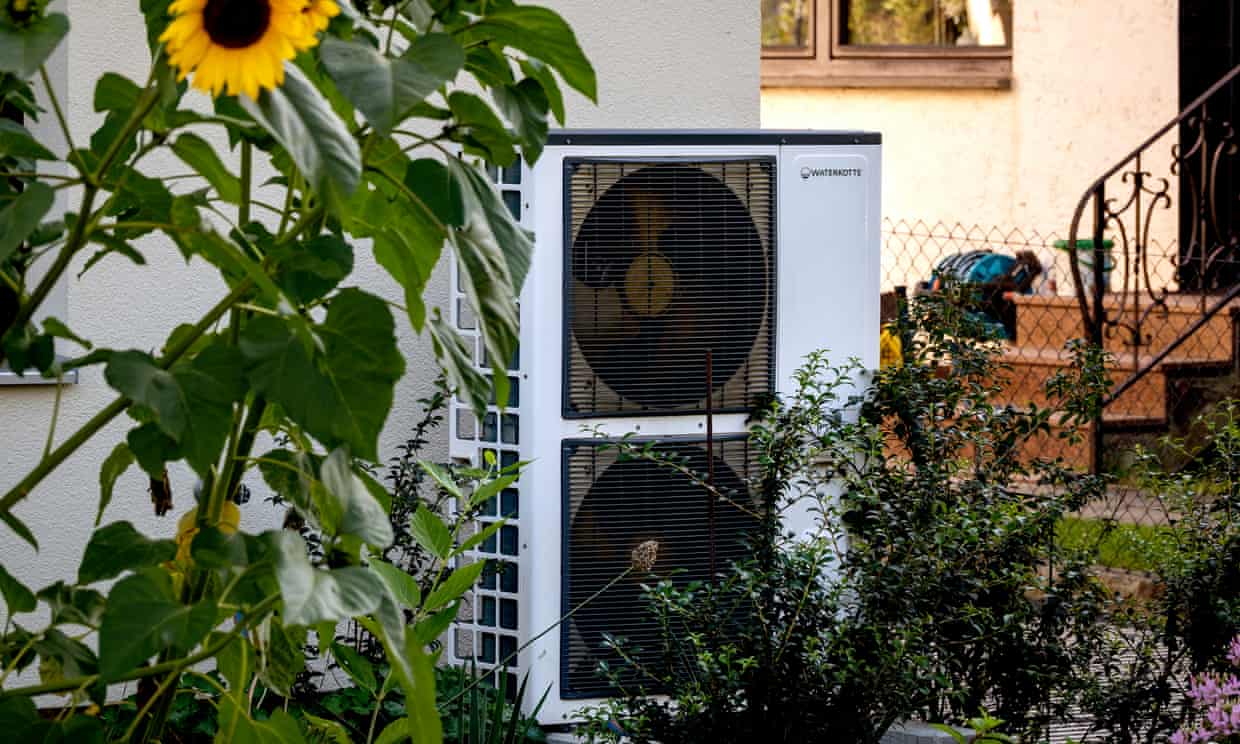
"Heat pumps are more than twice as efficient as fossil fuel heating systems in cold temperatures, research shows.
Even at temperatures approaching -30C, heat pumps outperform oil and gas heating systems, according to the research from Oxford University and the Regulatory Assistance Project thinktank.
Heat pump uptake is rising in many countries as fossil fuel energy prices have soared following the invasion of Ukraine and as governments seek to reach net zero greenhouse gas emissions.
But the UK has lagged far behind. France, for instance, installs 10 times as many heat pumps as the UK, where many people are unfamiliar with them and doubts about their efficacy have been widely publicised. Reports have spread that they do not work well in low temperatures despite their increasing use in Scandinavia and other cold climates."
Continue reading the article online (subscription may be required)
This narrated PowerPoint presentation reveals details on the two National Register Historic Districts located in Franklin, Massachusetts. The narration is presented by Reference Librarian Vicki Earls.
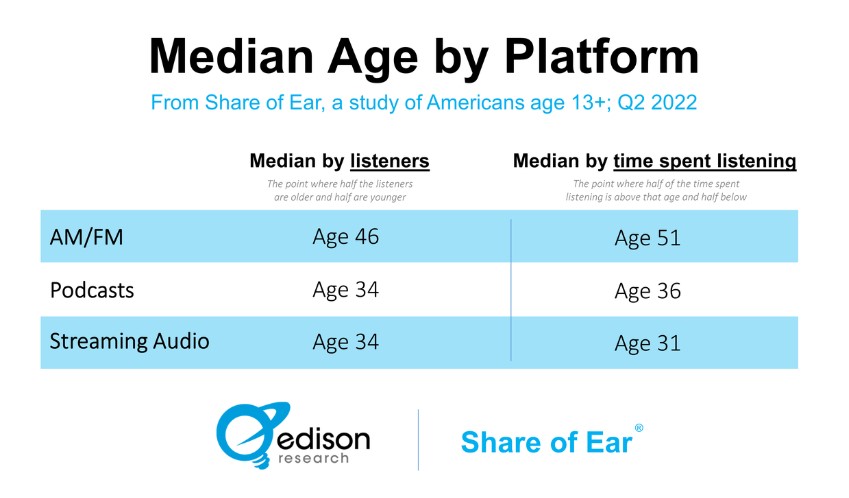
"We are regularly asked about the ‘median age’ of users to different audio platforms. Fortunately, with Edison Research’s Share of Ear® study we can answer this question – at least for those age 13 and older.
But there are two ways to solve for this, and the differences are interesting.
The two ways are represented in the table below. In the first data column you see the median age for the ‘cume’ or ‘reach’ of the 13+ audience – the point where half the listeners are older and half are younger. You will note that Streaming Audio (essentially listening to pureplays like Spotify, Pandora, Apple Music, Amazon Music, and the like – but not listening to podcasts on any of these platforms) and Podcasts have the exact same median age when looked at this way. The median listener to AM/FM Radio is 46 years old — 12 years older than the listener to streaming and podcasts. "
In the U.S., we have existing infrastructure that we could easily emulate to make gun use safer: the National Highway Traffic Safety Administration. Created by Congress in 1970, this federal agency is tasked, among other things, with helping us drive a car safely. It gathers data on automobile deaths. It’s the agency that monitors and studies seat belt usage. While we track firearm-related deaths, no such safety-driven agency exists for gun use."
"But because researchers concluded that additional “questions remain to be explored if we are to fully understand cookie flow phenomena,” the device was conceived with the idea of “enabling widespread use.” The authors also published instructions for those curious about how to build their own.
“I hope people can use this information to improve their cookie eating when they twist open an Oreo, or when they dunk it in milk,” Owens told CNN. “I hope people can also take inspiration to investigate other puzzles in the kitchen in scientific ways.
“The best scientific research, even at MIT, is driven by curiosity to understand the world around us,” Owens said. “When someone sees something weird or unknown and takes the time to think, ‘I wonder why that happens like that?’”
Continue reading the article (subscription may be required)
Register of Deeds William P. O'Donnell again reminds Norfolk County residents that you do not have to spend time and money driving to the Registry to view land records since they are available online via the Registry's internet-based document research system at www.norfolkdeeds.org.
"Providing secure, accurate and accessible land record information, coupled with our on-site customer service center, is central to our work here at the Norfolk County Registry of Deeds," stated Register O'Donnell.
Elaborating on the Registry's research capabilities, O'Donnell noted, "Users are able to research land record information by multiple options, including the name of the property owner and property address. Members of the public can access our internet-based document research system for many endeavors such as determining property ownership, researching land titles, reviewing land plans (only plans which are recorded at the Registry) and finally to confirm that documents affecting a person's property, such as mortgage discharges, have been recorded."
Through technology and the Registry of Deeds modernization initiatives there are a tremendous amount of documents for viewing. For example, our website www.norfolkdeeds.orgallows people to look up and view over 13 million scanned images with some 41 million pages of land documents dating back to the Registry's beginnings in 1793. Our Registry on-site IT Technology Department and Customer Service Center work to help anyone in need of internet research help find what they are looking for.
"A few years back, the Registry of Deeds completed a project which transcribed all our hand-written land documents that were recorded from 1793 to 1900. Prior to this effort, these hand-written documents were in many cases difficult to near impossible to read. With the transcription project completed, over 450,000 hand written documents were transcribed. Both the handwritten and the transcribed text can be viewed from the comfort of your home or business via our website www.norfolkdeeds.org."
It should be noted that while the transcribers made a best effort to translate these hard to read documents, their accuracy is not guaranteed. "These transcribed documents," noted O'Donnell, "are not legal documents in and of itself, and are not considered binding on the Norfolk County Registry of Deeds or its employees. It is considered merely a convenient reference for Registry users. For documentation purposes, users should refer to the scanned image of the original document instead of the transcribed image."
The Registry's website also provides information on how to obtain certified copies of land documents. The Registry's certified copy charges are $1.00 per page plus an additional $1.00 per document for postage.
In conclusion, Register O'Donnell stated, "Our core mission here at the Norfolk County Registry of Deeds includes providing our users with first-class customer service each and every day. Norfolk County residents and businesses deserve a Registry of Deeds that provides them with access to land record information in an easily accessible and consumer friendly manner. The Registry website www.norfolkdeeds.org does that by bringing the Registry records into your homes and businesses."
The Norfolk County Registry of Deeds is located at 649 High Street in Dedham. The Registry is a resource for homeowners, title examiners, mortgage lenders, municipalities and others with a need for secure, accurate, accessible land record information. All land record research information can be found on the Registry's website www.norfolkdeeds.org. Residents in need of assistance can contact the Registry of Deeds Customer Service Center via telephone at (781) 461-6101, or email us at registerodonnell@norfolkdeeds.org.
Register O'Donnell Promotes Registry of Deeds Internet Research
"When does online disinformation cross a line from mostly innocuous to harmful to others? A Boston-based researcher who studies disinformation and misinformation sought to break it down in a chart that rocketed across the Internet last week, offering clarity to readers in an age when new conspiracy theories seem to pop up all the time.
The chart, which was retweeted more than 18,000 times, is organized to convey both an increasing detachment from reality and threat level, with the top grouping largely rooted in antisemitic views, its creator, Abbie Richards said. She emphasized that her design is “just one of many conspiracy theory frameworks.”
In the time since Richards first designed her framework for understanding conspiracies and conspiracy theories, monumental events like the 2020 presidential election had not yet taken place nor had the coronavirus pandemic become as deeply intertwined with daily life."
Continue reading the article online (subscription maybe required)